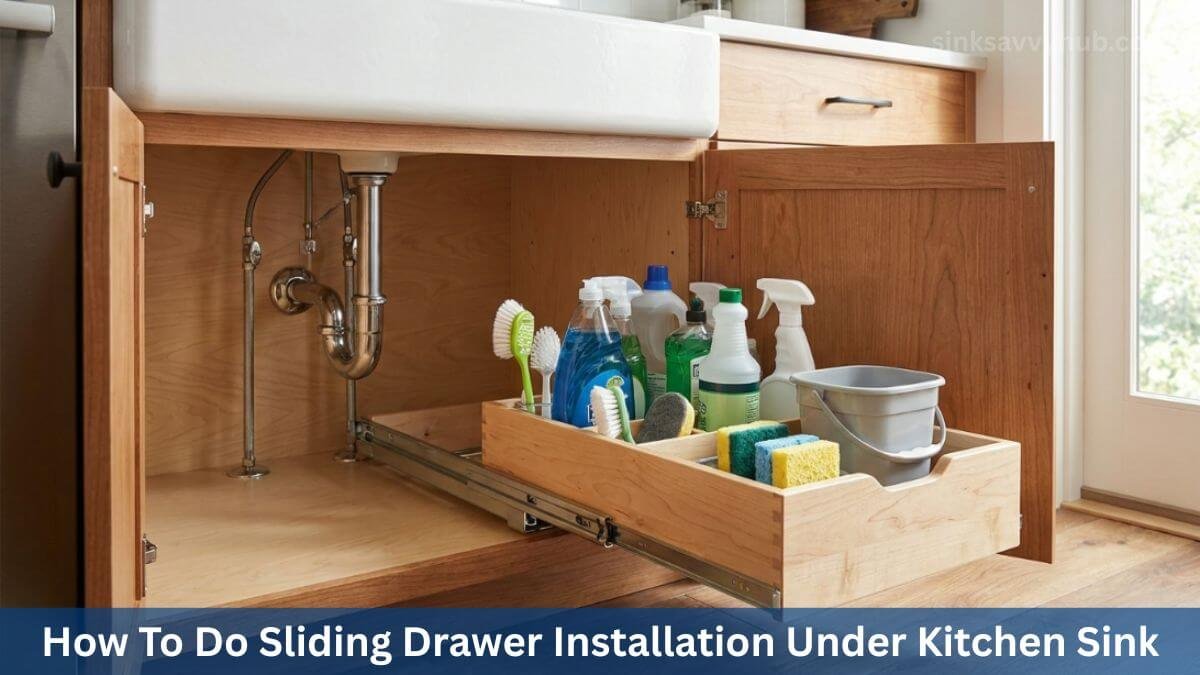

That space under the sink looks simple, but pipes and drains usually get in the way. It turns into an awkward, crowded spot where things get lost easily.
A sliding drawer can make this area much easier to use. Once you set one up, you stop reaching into the back and start grabbing what you need from the front.
I have installed a few of these over the years. Choosing the right material matters, especially in damp environments where thin metal might rust over time.
A solid pull-out system keeps you from crouching on the floor. It is a practical upgrade that makes your daily cleanup routine a bit smoother.
Why Sliding Drawers Work Better Than Most Storage Solutions
A sliding drawer brings your hidden supplies forward instead of forcing you to reach into the back. You do not have to kneel on the floor to find a lost sponge.
Last month, I knocked over my tall spray bottles trying to reach the dish soap. Static bins often leave that deep back half completely unused because you simply cannot see what is there.
A pull-out tray handles this issue by using the full depth of your cabinet. You pull the track, and the back row comes out to you naturally.
This sliding setup also leaves room for other simple storage fixes.
- Pairing with a spinner: You can place a small turntable next to the metal track.
- Fixing awkward corners: The deep drawer uses the middle, while a round spinner fills the side gaps.
- Protecting the wood: Many setups do not need drilling into the base.
Using a tension-mount system means renters can take the organizer with them when they move. It leaves the cabinet base looking normal and completely safe.
What to Know Before You Start the Installation
Checking your pipe layout and cabinet frame first saves you from buying the wrong size. A little prep work stops you from making a frustrating return trip to the store.
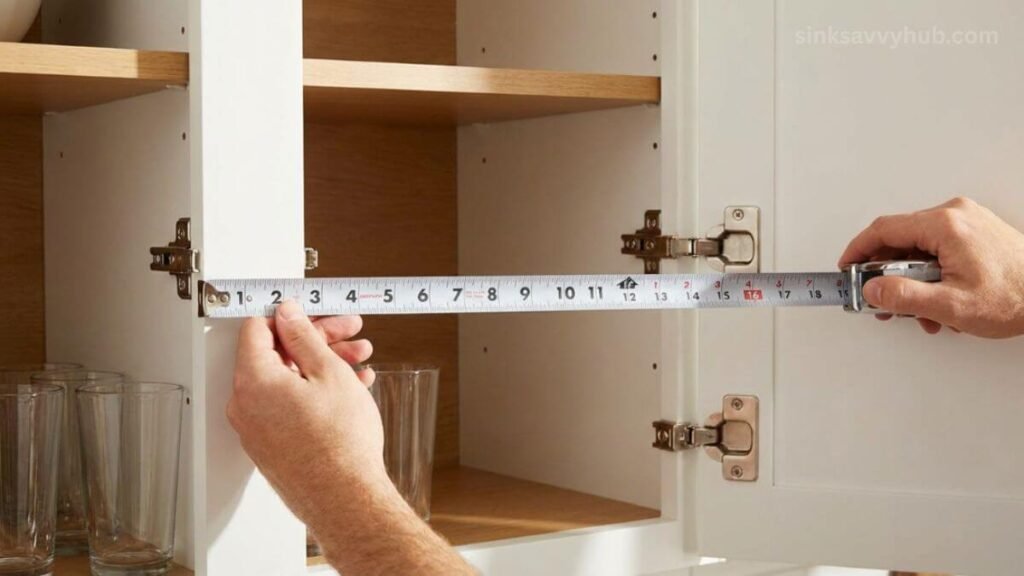
I once bought a wide metal drawer without measuring the door hinges. It got stuck halfway, and I had to take it all apart.
Measure the Cabinet Opening Not the Interior
Measure the clear open space between your doors instead of the wide inside walls. The track must slide past your open doors without scraping the wood frame.
Look at where your drain lines touch the base floor. For cabinet storage around the drain lines, try to leave a few inches of empty space on both sides of the plumbing.
Know What Type of Cabinet You Have
Look closely at your front cabinet frame. Face-frame cabinets have a thick wooden border that can block wider sliders.
Frameless styles usually give you more flat room to work with. If you have a center wood bar, a single wide drawer will probably not fit.
Tools You Will Likely Need
You do not need a heavy tool bag, but a few basics help the job go smoother. Just grab these simple items:
- A tape measure and a dark pencil for marking the floor.
- A hand screwdriver or a basic power drill.
- A small level to keep your tracks flat.
Keeping these tools nearby makes the process steady and organized. You can finish a basic screw-mount setup easily in a single afternoon.
Types of Sliding Drawer Systems for Under the Kitchen Sink
The best drawer setup depends on your specific plumbing layout and how heavy your supplies are. You generally have three main choices for your cabinet.
Tension-Mount Pull-Out Drawers
These use tight spring rods to lock firmly against your side walls. You do not need a power drill or any screws to set them up.
This is a safe pick if you rent your home. The main downside is that they can shift slightly over time if you load them with very heavy gallon jugs.
Screw-Mount Track Systems
You drive screws into the base floor to hold these metal tracks securely. They stay much steadier when you stack heavy, wet supplies on them.
I put a screw-mount setup in my own kitchen because my floor cleaners kept shifting a loose tray. It takes a bit more effort to build, but it handles weight better.
Two-Tier Pull-Out Systems
These tall setups give you a sliding bottom tray and a narrower top shelf. They are good options if your cabinet has a lot of open height.
You have to make sure the top shelf clears your drain hose. The top rack must also miss the sink bowl sitting right above it.
Checking these two heights before you shop stops a lot of headaches. It keeps you from buying a rack that scrapes your pipes.
Step-by-Step Sliding Drawer Installation Under Kitchen Sink
Taking your time during the installation keeps the tracks running smoothly later. Rushing the alignment can cause the new drawer to stick or slide poorly.
I once rushed a track setup and ended up with a crooked slider. Taking it slow from the start prevents that kind of frustration.
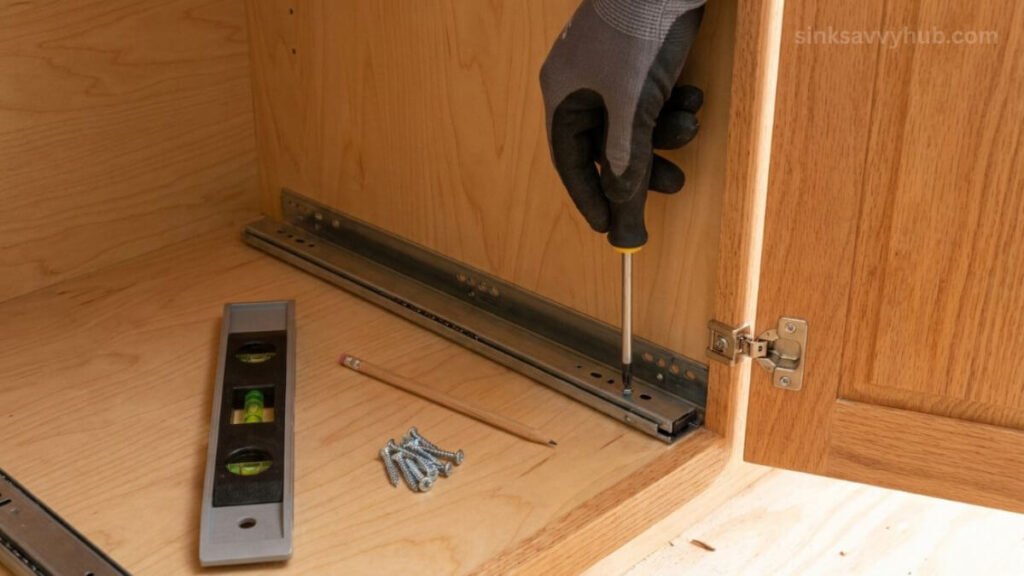
Step 1 – Clear the Cabinet and Mark Your Pipe Locations
Pull every single sponge and bottle out onto the floor first. Grab a pencil and draw lines on the wood base where your pipes sit.
This trick shows you exactly how much safe floor space you have to work with. It takes the guesswork out of avoiding the thick plumbing.
Step 2 – Position the Drawer Frame Around the Pipes
Slide your empty frame inside the base to test the fit. Line it up with your pencil marks so it easily clears the cold drain lines.
Setting up storage around sink plumbing requires careful spacing. If the back of the frame touches the pipes, shift the unit to one side.
Step 3 – Secure the Mounting System
You need to lock the frame down so it does not shift during use. For tension bars, push the arms against the walls until they grip firmly.
If you use screws, drill them straight into the marked wood floor. Pull the empty drawer out a few times to test the glide before adding weight.
Step 4 – Add Organizers Inside the Drawer
Treat your new moving drawer like an open shelf. Drop in small plastic bins to separate your sponges from your heavy glass cleaners.
This helps keep your supplies standing upright. It stops bottles from falling over when you open the metal drawer quickly.
What to Do With the Space the Drawer Doesn’t Reach
A sliding drawer holds a lot, but you can still use the empty corners and doors. Adding small organizers helps you use the leftover gaps.
My slider left a six-inch gap near the right wall. It felt like wasted room until I added a few small tricks to my layout.
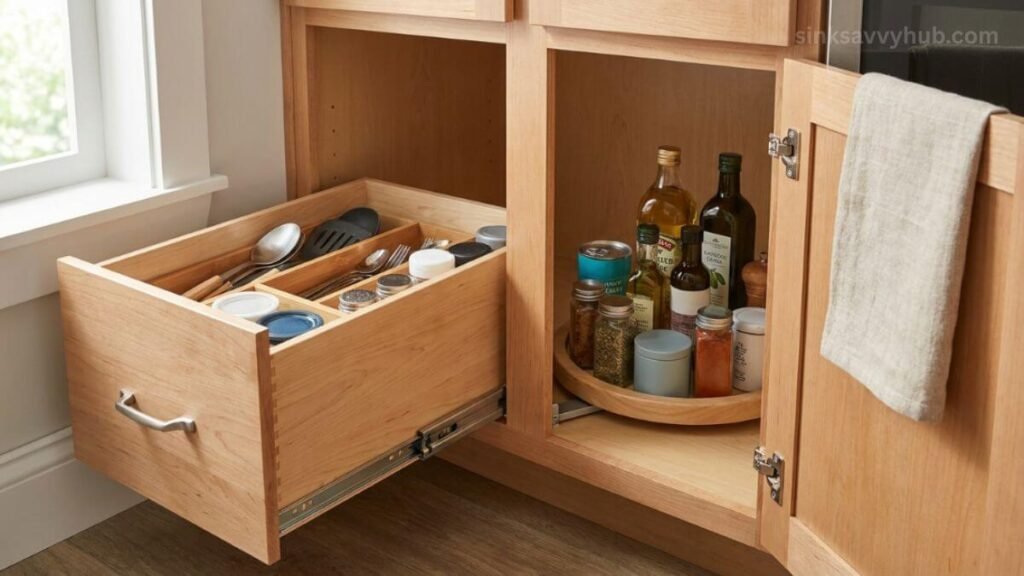
Push a D-shape lazy Susan into the back corner beside your new track. This spins your extra items right to the front so you can reach them.
You can also hang a simple wire rack on the inside of the door. It holds flat items like trash bags or rubber gloves without crowding the base floor.
Wedge a tension rod across the high top frame to hang spray bottles. These additions keep your sliding track clear and create a more complete system.
Common Mistakes to Avoid During Installation
Small errors during the setup cause most of the problems you might face later. Skipping a level check or measuring the wrong gap can make the track stick.
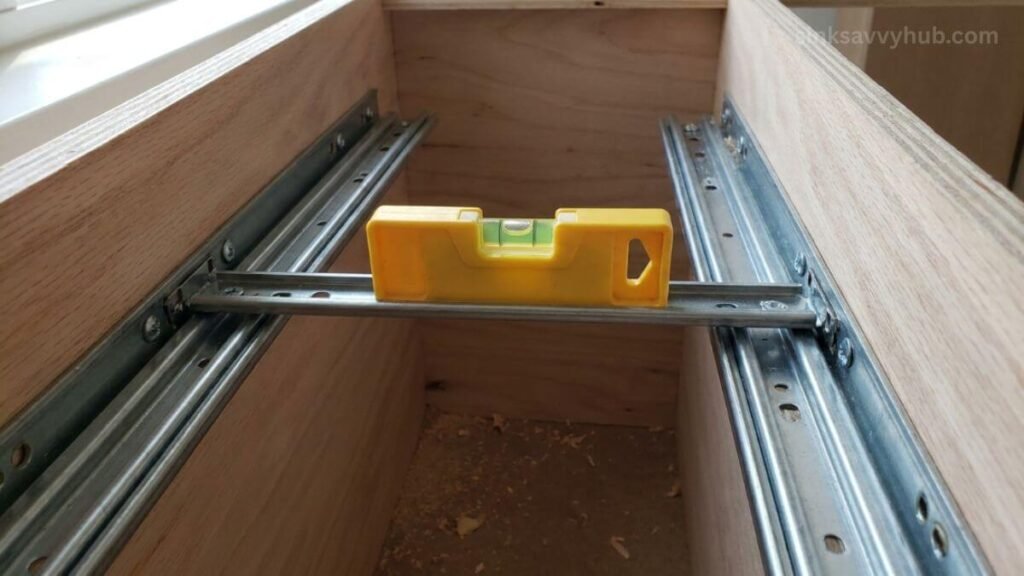
I ruined a setup last year by measuring the wide inside walls instead of the narrow door opening. My new drawer scraped the wood frame every time.
| Common Installation Mistake | How To Fix It |
| Measuring the inside walls | Measure the clear open door gap only. |
| Ignoring the drain pipes | Offset the metal track to the left or right. |
| Skipping the level check | Use a basic level so the tracks stay flat. |
| Overloading the tray early | Test the slide with a few light items first. |
Do not rush to fill the tray right away. If you load heavy glass sprays on fresh tension mounts, the track might shift out of place.
Always double-check your exact measurements before buying under-sink pull-out drawers. Taking a few extra minutes today prevents a lot of rework later.
Frequently Asked Questions
Can I use a sliding drawer with thick pipes?
Yes, you can build storage around sink plumbing easily. Look for a U-shape wire drawer that slides past the drain. Always measure your pipe clearance first.
How do I install one without a drill?
You can use strong spring rods for a fast setup. They press hard against the side walls to stay tight. This leaves the cabinet wood looking clean.
Are these safe for folks who rent their home?
Yes, tension-mount drawers are great for renters. They lock firmly onto the wood without steel screws. You can easily remove the tracks when you move out.
How do I use the dead space next to the track?
Place a small round tray in the empty back gap. This keeps the main drawer perfectly clear. You spin the small dish to find your spare sponges.
How should I sort items inside the moving tray?
Drop small square bins directly into the tray. It is a smart way to organize cleaning supplies under sink zones. Small dividers stop tall sprays from tipping over.
A Simple Drawer Can Change the Whole Cabinet
Adding a sliding drawer under the kitchen sink usually takes less than an hour. It helps keep your daily chores organized and easier to manage.
You stop losing bottles behind the pipes. Pulling a smooth metal track to grab a sponge is much easier than reaching into the dark space.
Measuring the gap, setting the track, and adding a small door organizer makes the space functional. It is a practical way to sort out a tough storage area.