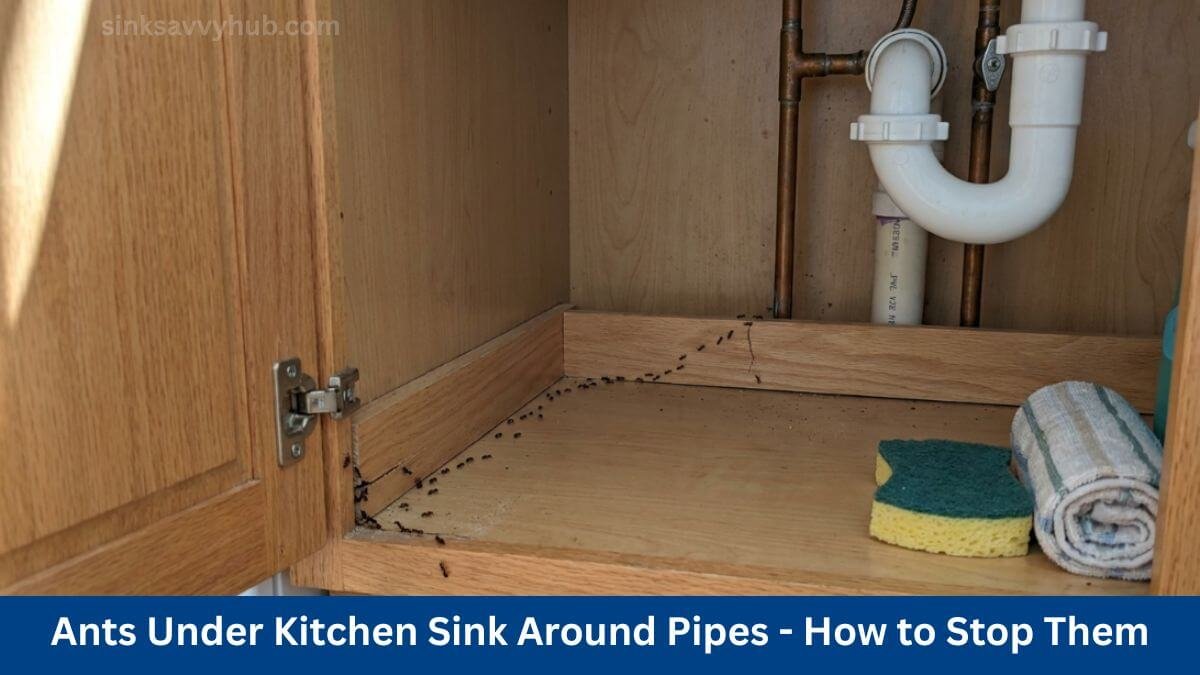

I noticed the ants when I reached under the sink for dish soap and saw a thin line moving near the pipes. Ants under kitchen sink around pipes often show up because that spot gives them water, cover, and tiny gaps to slip through.
It can look small at first, but a steady trail usually means they are finding something useful there. In this guide, I’ll explain why they gather there. I’ll show you how to find the entry point, remove them from the cabinet, and seal the openings to keep them out.
Why Ants Gather Under the Kitchen Sink Around Pipes
Ants gather here because this spot gives them what they need fast. When I checked under my sink, I noticed the cabinet had three things ants love at the same time: moisture, cover, and small gaps near the plumbing.
It looked clean at first, so I almost missed the real problem. But once I paid closer attention, it made sense why ants under kitchen sink around pipes kept showing up there and not somewhere else.
Moisture From Small Leaks, Condensation, or Damp Cabinet Corners
The first thing I noticed was moisture. It does not take a big leak. A slow drip, pipe sweat, or a damp cabinet corner can give ants a steady water source. In a dark sink cabinet, that alone can keep them coming back.
Crumbs, Sticky Spills, and Residue From Cleaning Products or Trash
I also found tiny messes that were easy to ignore. A bit of syrup on a bottle, dish soap residue, or drops from the trash can be enough. Even when the cabinet looks tidy, small food residue can still attract kitchen ants.
Warm, Dark Hiding Spots That Stay Undisturbed for Long Hours
Under the sink stays quiet for most of the day. That makes it a safe hiding place. Ants like spots where they can move along corners, rest behind stored items, and stay out of sight.
Gaps Around Sink Pipes That Give Ants an Easy Way In
The biggest clue for me was the pipe openings. Small gaps around sink pipes can act like a doorway from the wall or floor into the cabinet. If ants find water and food there too, they keep using that same path again and again.
How to Tell if You Are Dealing With a Small Ant Problem or an Active Nest Nearby
I could tell the difference by watching the pattern, not the number of ants. A few random ants usually meant they were scouting. A steady line, repeated at the same spot, told me the problem was more active and the nest might be close.
A Few Wandering Ants Versus a Steady Ant Trail Under Kitchen Sink
When I first looked under the cabinet, I only saw a few ants. That did not worry me much. But when I checked again later and saw the same trail near the pipes, it felt different. A steady ant trail under kitchen sink usually means they have found water, food, or both.
Signs the Ants May Be Coming From Inside the Wall
I started paying attention to where they appeared. If ants seem to come out from a gap near the pipe, a crack in the back panel, or the wall corner, the nest may be behind the cabinet or inside the wall. That is usually more than a surface problem.
When Ant Activity Gets Worse in the Morning, Evening, or After Rain
I noticed the movement was not always the same. Some days it looked quiet in the afternoon, then busy again at night. Rain can also push ants indoors. Extra activity after damp weather often points to a stronger nearby colony looking for a dry path.
What It Means if Ants Keep Returning After You Wipe Them Away
If they come back soon after cleaning, I take that as a sign the source is still active. Wiping removes the ants I can see, but it does not remove the nest, the entry point, or the moisture that keeps drawing them in.
How to Trace Where Ants Are Entering Under the Sink
I had better luck when I stopped treating the whole cabinet and started tracing the path. To find where ants are coming from under the kitchen sink, start by watching where they appear. Then, check every gap, seam, and pipe opening nearby.
Check the Pipe Entry Points at the Back and Bottom of the Cabinet
I looked at the places where the drain pipe and water lines passed through the cabinet. That was my first clue. Ants often use those cutouts because these openings connect the wall, floor, and sink base.
Look for Gaps Around Sink Pipes, Cracked Caulk, and Loose Escutcheon Rings
When I checked closely, I found small openings I had ignored before. A loose pipe ring, split caulk, or rough gap around the plumbing can give ants a clean path inside. Even a tiny space can be enough.
Follow the Ant Trail Along Corners, Seams, and Cabinet Edges
I noticed ants rarely moved across the open middle for long. They liked the edges. So I followed the trail along the back corners, side seams, and cabinet joints. That made the route easier to read.
Inspect Nearby Baseboards, Wall Cracks, and Flooring Gaps
The entry point was not always right under the pipe. I also checked the baseboard near the sink, small wall cracks, and the gap where the cabinet met the floor. Sometimes the trail started there, then curved inward.
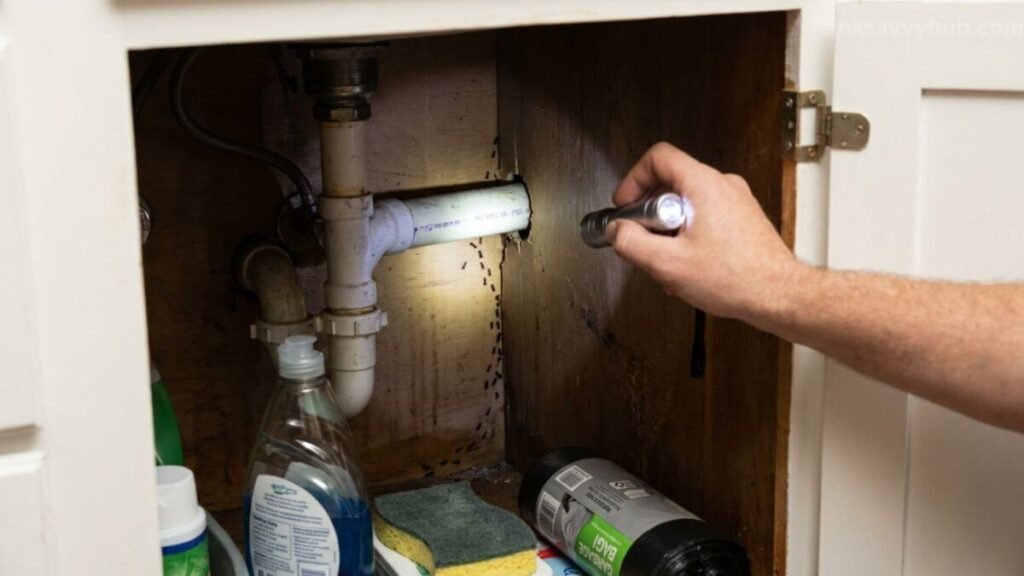
Use a Flashlight to Spot Tiny Movement Behind Stored Items
A flashlight helped more than I expected. Once I moved bottles and bags and shined light into the dark corners, I could see tiny movement I had missed at first. That step saved me from guessing and helped me find the real entry area faster.
What Attracts Ants Inside Kitchen Cabinets Even When the Sink Looks Clean
I learned that a cabinet can look clean and still attract ants. In my case, the problem was not obvious dirt. It was small hidden things like sweet residue, damp paper, food smells, and moisture that stayed trapped under the sink.
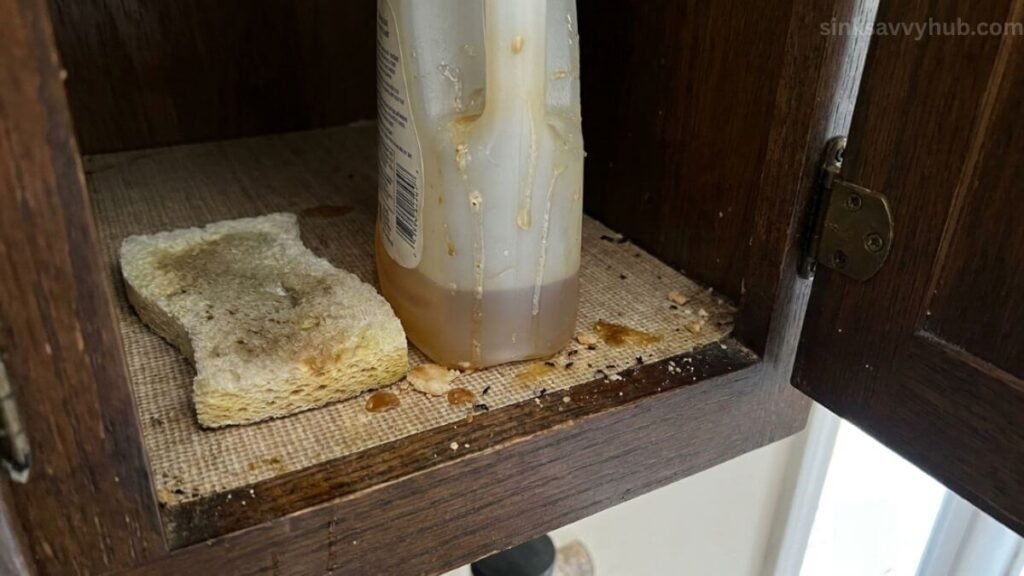
Sweet Residue From Soap, Syrups, or Spilled Drinks
One thing that surprised me was how little it took. A sticky spot on a soap bottle, a drop of syrup, or a small spill near the cabinet wall was enough to pull ants in. The cabinet looked fine at a glance, but ants do not need a big mess to find something worth following.
Pet Food, Onions, Potatoes, or Stored Pantry Items Nearby
I also noticed the sink area can attract ants when food sits close by. Pet food, onions, potatoes, and other pantry items draw ants. If you store these near the cabinet, they can attract ants and keep them in that area of the kitchen. Even if the ants are under the sink, the pull may be coming from nearby storage.
Wet Sponges, Damp Paper Towels, and Slow Drips That Keep the Area Humid
Moisture kept showing up as part of the problem. A wet sponge, a damp paper towel, or a slow drip under the pipe can keep the cabinet humid for hours. That kind of damp space makes ants under kitchen sink around pipes much more likely to return.
Trash Bins, Recycling, or Dirty Dishwater Close to the Cabinet
Trash and recycling can add another layer. Food bits, sweet residue, and dirty dishwater smells can drift into the cabinet area even when the sink looks neat. That’s why I stopped judging the space by looking. I began checking for hidden attractants instead.
What to Do First Before Using Bait, Spray, or Home Remedies
I got better results when I stopped rushing and prepped the cabinet first. Before treating ants under kitchen sink around pipes, I needed to see the trail clearly, remove the damp mess, and make the area safer to work in. That simple prep made the next step much easier.
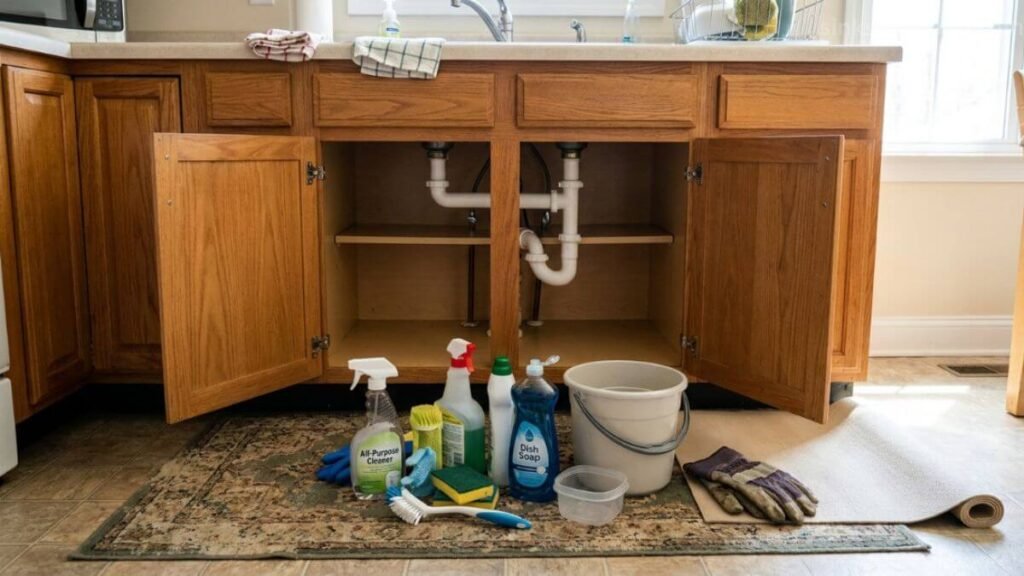
Before I used anything, I made sure to:
- Empty the cabinet
- Wipe up moisture and sticky spots
- Watch where the ants were moving
- Keep kids and pets away from the area
Empty the Cabinet So You Can See the Full Path
The first thing I did was take everything out. Once the bottles, bags, and cleaners were gone, I could finally see where the ants were travelling. Before that, too much stuff was blocking the real path.
Wipe Up Moisture and Remove Anything Sticky or Damp
I cleaned up wet rings, sticky drips, and damp paper right away. That helped in two ways. It removed part of what was attracting the ants, and it made fresh ant activity easier to spot.
Do Not Crush the Ants Along the Trail
I wanted to crush them at first, but I held back. When I stopped doing that, the trail stayed easier to follow. It also helped me see whether they were coming from the pipe opening, the cabinet corner, or another gap nearby.
Avoid Spraying Randomly Before You Know the Entry Point
This was one of the easiest mistakes to make. A random spray feels like quick progress, but it can scatter ants and make the route harder to track. I got better results once I found the entry point first and treated it with more control.
Keep Children and Pets Away From Treatment Areas
Before I placed bait or used any product, I made sure the area stayed off limits. Under the sink may feel hidden, but it is still part of the kitchen, so safety matters from the start.
How to Get Rid of Ants in Kitchen Cabinets Without Making the Problem Worse
What worked best for me was using the right treatment in the right spot and not overdoing it. In most cases, indoor kitchen ants responded better to a careful bait setup than to heavy spraying.
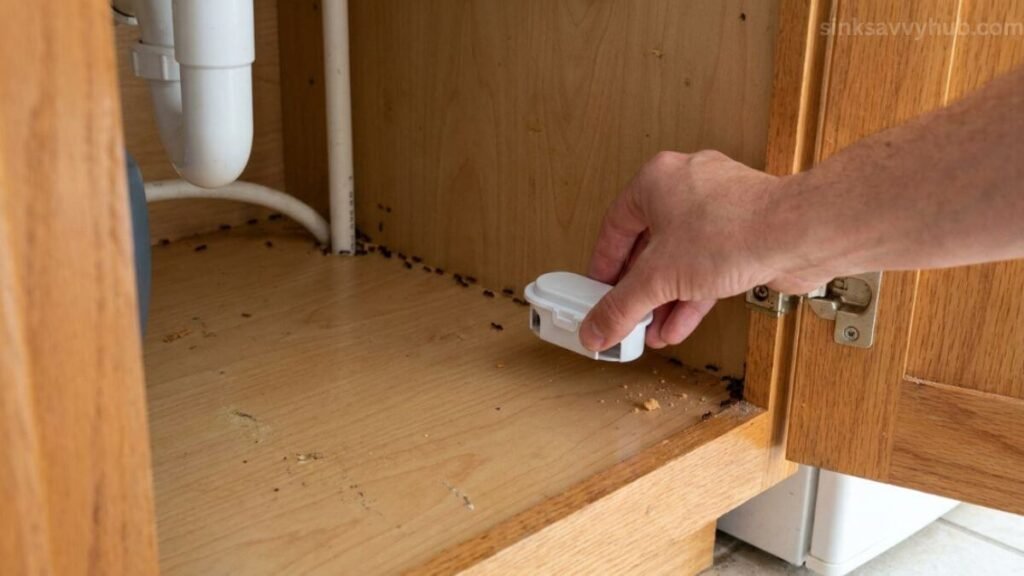
Here is what made the biggest difference for me:
- Put bait where ants were already active
- Avoid spraying the main trail too early
- Clean around the problem, not through the bait path
Use Ant Bait Where the Ants Are Actively Traveling
I placed bait close to the trail, not in a random part of the cabinet. If ants were moving along a seam, corner, or pipe gap, that was the best place to start.
Why Bait Often Works Better Than Spray for Indoor Kitchen Ants
Bait usually worked better for me because the ants carried it back instead of dying right where I saw them. Spray gave fast results on the surface, but it often missed the bigger problem behind the cabinet or wall.
Place Bait Near the Trail but Away From Food Prep Surfaces
I kept the bait inside the cabinet and close to the route, but away from anything tied to food use. That felt like the cleanest and most practical setup in a working kitchen.
Clean Only the Extra Mess, Not the Active Bait Path Right Away
Once I placed the bait, I stopped over-cleaning. I wiped up extra grime, but I left the active path alone for a bit. Cleaning too soon can break the trail before the bait has time to work.
When a Light Contact Spray May Help and When It Usually Backfires
A light contact spray can help if a few ants spread far from the main route. But when I sprayed the main trail too early, it usually backfired. It killed the ants I could see, but it did not fix why they were there.
How to Clean the Area After Ant Activity Starts Slowing Down
I got better results by waiting for the ant activity to drop. Then, I cleaned the area carefully. If I cleaned too early, I could disturb the treatment. Once the trail slowed, cleaning got rid of the mess, the old scent path, and the damp conditions that kept the ants coming back.
When I started cleaning, I focused on four simple things:
- dead ants and loose debris
- sticky bottles and dirty shelf liners
- the old ant trail under the sink
- damp spots near the pipes
Remove Dead Ants, Dust, and Cabinet Debris
The first thing I did was clear out the obvious mess. I removed dead ants, dust, bits of paper, and loose debris from the cabinet floor. That made the area easier to check and helped me see whether any fresh ant activity was still starting up.
Wash Shelf Liners, Bottles, and Stored Items Before Putting Them Back
Before I put anything back, I cleaned the items that had been sitting under the sink. Bottles can have sticky bottoms, and shelf liners can hold crumbs, dust, and moisture. A quick wash or wipe helped more than I expected.
Wipe Along the Old Ant Trail Under Kitchen Sink Once Activity Drops
Once the trail was no longer active, I wiped along the old route. I paid close attention to the corners, cabinet seams, and the area near the pipes. That helped remove the scent line the ants had been following.
Dry the Cabinet Fully So Dampness Does Not Attract New Ants
This part mattered more than I expected. After cleaning, I dried the cabinet well, especially around the pipe openings and in the back corners. If moisture stays behind, ants under kitchen sink around pipes can come back even after the first round slows down.
How to Seal Pipe Openings to Keep Ants Out for Good
Once the ant activity dropped, sealing the openings became the long-term fix. Treatment got rid of the visible ants, but sealing the entry points stopped them from coming back the same way.
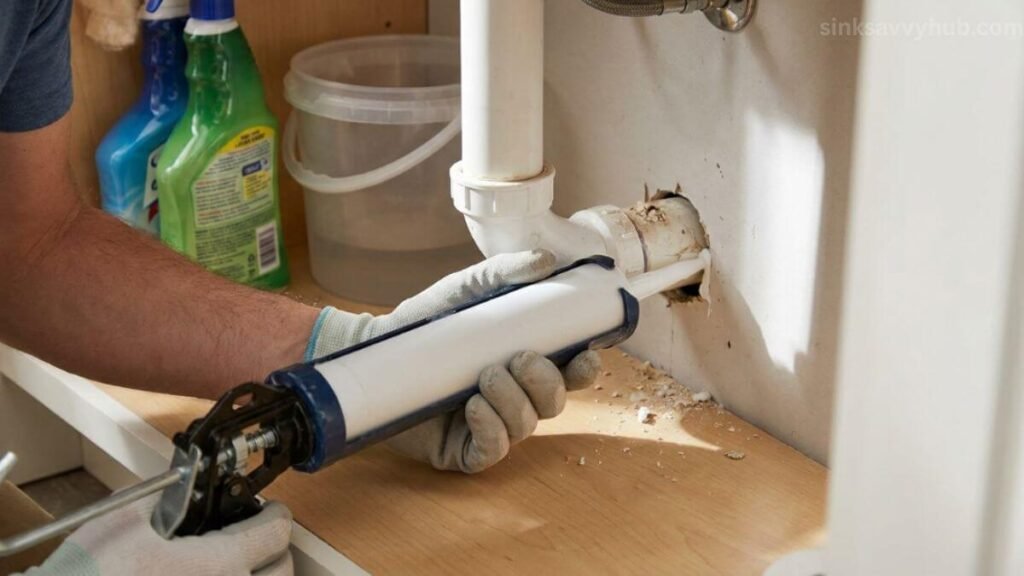
I treated the openings in two simple groups:
- small cracks and narrow gaps for caulk
- larger openings that may need foam or filler first
Find the Exact Gaps Around Sink Pipes Before Sealing Anything
I did not seal everything at once. First, I checked the pipe openings carefully and looked for the exact gaps the ants had been using. That mattered because sealing the wrong spot would not solve much.
Best Places to Use Caulk Around Small Wall or Cabinet Gaps
For small cracks and thin gaps, caulk made the most sense. I used it where the cabinet met the wall and around narrow spaces near the pipe cutouts. It worked well on small openings, not wide holes.
When Expanding Foam May Help Around Larger Openings
Some openings were too large for caulk alone. In those spots, expanding foam made more sense as a first step. I treated it as a way to fill a larger space, not as something to use everywhere, because it can get messy fast.
How to Seal Pipe Openings to Keep Ants Out Without Trapping Moisture
I made sure the area was dry before sealing anything. I did not want to close up an active leak or damp patch inside the cabinet. If moisture is still there, sealing over it can cause another problem later.
Check Nearby Cracks Where Pipes Meet the Wall or Floor
I also checked the nearby wall and floor edges, not the round space around the pipe. Ants can come through small cracks beside the plumbing and then move into the cabinet from there. That extra check helped me catch spots I would have missed.
How Moisture Problems Make Ants Keep Coming Back
Moisture was one of the biggest reasons the ants kept returning. Even after I cleaned up the mess, a damp cabinet still gave them a reason to stay near the sink.
Small Leaks Under the Drain or Supply Lines
A slow leak under the drain or water line can keep the cabinet lightly wet all day. I learned that it does not need to drip hard to matter. Even a small leak can create a steady water source.
Pipe Condensation During Hot or Humid Weather
Sometimes the problem was not a leak at all. In warm or humid weather, cold pipes can sweat and leave moisture behind. That kind of dampness is easy to miss because it comes and goes.
Cabinet Bottoms That Stay Damp After Cleaning
I also noticed that the cabinet floor could stay damp longer than I expected. Paper towels, shelf liners, or the cabinet bottom itself can hold moisture, especially in dark corners where air does not move much.
When Fixing a Leak Matters More Than Adding More Bait
This was the part that changed the whole problem for me. If moisture is still there, more bait can only do so much. Fixing the leak, drying the cabinet, and sealing the gaps usually matters more than adding more treatment again and again.
Common Mistakes People Make When Ants Show Up Under the Sink
I noticed the problem lasted longer when I made small mistakes without realizing it. Some steps felt helpful in the moment, but they made the ants harder to control. Once I stopped doing those things, the cabinet became much easier to manage.
| Mistake | What it causes |
| Spraying the trail too early | Scatters the ants and makes the route harder to track |
| Sealing gaps before control | Can push ants toward another hidden entry point |
| Leaving damp items under the sink | Keeps moisture in place and draws ants back |
| Putting items back too soon | Blocks inspection and hides fresh activity |
| Treating once and never checking again | Lets the problem return before you notice it |
Spraying the Trail and Ignoring the Nest Route
This was one of the easiest mistakes to make. Spraying the ants I could see felt like fast progress, but it did not show me where they were coming from. In some cases, it only broke up the trail and made the real source harder to find.
Seal Gaps Before You Control the Ants
I also learned not to seal openings too early. If the ants are still active, closing the gap right away can send them to another crack, seam, or wall space. That makes the problem harder to track, not easier.
Leaving Damp Sponges or Paper Towels Under the Sink
This one is easy to miss. A damp sponge or paper towel can keep the cabinet humid for hours. Even if the food mess is gone, that moisture can still attract ants under kitchen sink around pipes.
Putting Items Back Too Soon and Blocking Inspection
I made this mistake once. I cleaned the area, felt relieved, and put everything back too fast. But once the bottles and bags were in place again, I could not clearly see whether the ants were still using the same path.
Treating Once and Never Checking Again
One round of treatment does not always finish the job. I got better results when I checked under the sink again over the next few days. That helped me catch fresh activity early before it turned into the same problem again.
When Ants Under Kitchen Sink Around Pipes May Need Professional Help
I realized I needed professional help when the ants returned after I had cleaned, baited, dried, and sealed the area. If ants keep coming back under the kitchen sink, even after fixes, the issue might be bigger than the cabinet.
Repeated Activity Even After Baiting and Sealing
This was the biggest warning sign for me. If the same trail appears after the bait works and seals the gaps, a hidden nest might be nearby. There could also be another entry point I missed.
Ants Appearing From Walls, Outlets, or Multiple Rooms
I would take this seriously. Once ants start showing up from wall gaps, outlets, or rooms beyond the sink area, it no longer feels like one small cabinet problem. That can point to a larger indoor trail or a nest inside the wall.
Large Numbers of Ants Every Day
A few ants are one thing. Large numbers every day are different. If I were seeing fresh ants each morning or long trails by evening, I would stop treating it like a minor issue.
Signs of Carpenter Ants or Structural Moisture Damage Nearby
This is the part I would not ignore. If the ants look bigger than regular kitchen ants or I notice damp wood, soft cabinets, or water damage, I’d call a pest expert or plumber right away.
Frequently Asked Questions
Why are ants under my kitchen sink around pipes and nowhere else?
That spot gives them what they need most at one time. It often has moisture, cover, and small gaps around the plumbing that make entry easy.
Can I seal the gaps right away or should I wait?
I wait until the ant activity starts slowing down first. If I seal too early, I can block the trail without dealing with the colony behind it.
How long does ant bait take to work indoors?
Indoor ant bait usually takes a few days to start making a clear difference. Some problems improve fast, but steady activity can take a week or more to settle down.
What if the ants disappear for a day and then come back?
That can happen while the bait is still working or when another gap stays open nearby. If they come back, I check the trail again and look for moisture or missed entry points.
How often should I check under the sink after treatment?
I like to check it every day for the first few days, then once a week after things calm down. That makes it easier to catch a new activity before it turns into another steady trail.
Conclusion
I found that ants under kitchen sink around pipes usually show up for a simple reason. That space gives them water, cover, and an easy way in. Once I saw that clearly, the problem started to make more sense.
What helped most was handling both sides of it. I had to deal with the ants, but I also had to fix what was attracting them in the first place. Following the trail, checking gaps around sink pipes, and using bait carefully all worked well together. Drying the cabinet and sealing the openings also helped more than any one step alone.
For me, that was the real fix. Small ant problems under the sink are often manageable at home if you stay patient and pay attention to the details. If the ants keep returning, something under the sink likely needs fixing.