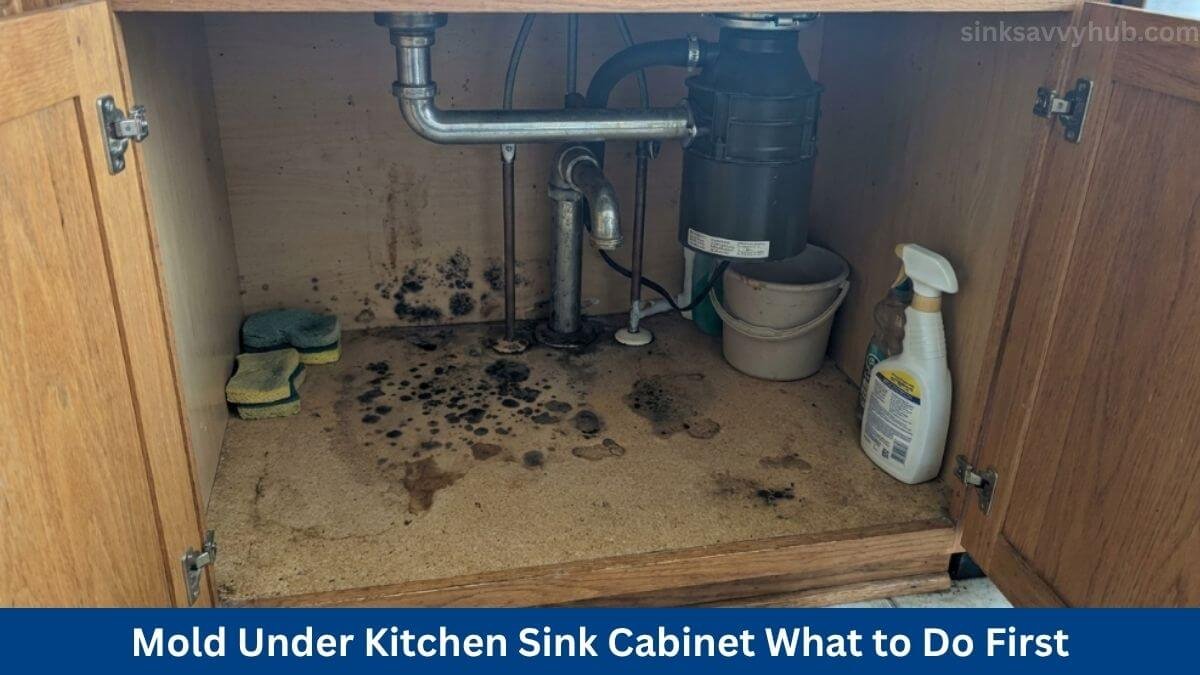

I noticed it as soon as I opened the cabinet. A musty smell hit me first. Then I saw damp wood and a few dark spots near the pipes. That is often how mold under kitchen sink cabinet problems start.
Hidden moisture usually causes it. A slow leak can keep the cabinet wet for days. Pipe condensation can add even more moisture. Trapped humidity can make the problem worse. This issue is not just about appearance. It can cause odor, damage the cabinet, and make the mold return.
In this guide, I will help you find the cause. I will show you how to check for water damage under the sink. You will also learn how to clean mold from cabinet surfaces and how to keep it from coming back. The good news is that you can often handle this early if you act fast.
Why Mold Shows Up Under a Kitchen Sink Cabinet in the First Place
Mold under kitchen sink cabinet usually shows up because moisture stays trapped in a dark, closed space. That was the pattern I saw too. The cabinet did not get wet all at once. It stayed slightly damp for days, and that gave mold a chance to grow. Under a sink, even a small amount of moisture can linger longer than people expect.
Small Leaks That Keep the Cabinet Damp
A tiny drip can do more damage than people expect. I have seen cabinets stay wet from a slow leak around the drain pipe or a loose slip joint. It was not a big puddle. It was just enough water to keep the wood damp day after day. That is why small leaks often go unnoticed until the smell or damage starts to show.
Condensation From Cold Pipes
Sometimes the pipe is the problem even when nothing leaks. On warm days, cold water lines can sweat and leave drops on the cabinet floor. I have noticed this more in humid weather, when the space under the sink feels stuffy fast. If that moisture keeps showing up and never dries well, mold can start there too.
Poor Airflow Inside a Closed Sink Cabinet
That cabinet stays shut most of the time, so moisture has nowhere to go. Once I opened the doors and felt that stale, damp air, the reason made sense. Low airflow slows drying, and that gives mold a better place to spread. Even a minor damp spot can stick around much longer in a closed cabinet.
Spills, Soaked Cleaning Bottles, and Wet Sponges That Sit Too Long
Not every problem starts with plumbing. I have found wet sponges, leaking cleaner bottles, and soaked shelf liners creating the same mess. Even small spills can build up when nobody notices them. Under a sink, a little moisture can sit there longer than you think. That is why I stopped leaving damp items there for too long.
Early Signs of Mold Under Kitchen Sink Cabinet You Should Not Ignore
The first signs usually show up before the mold looks severe. In my case, I noticed the smell first, then the dampness, and only after that did I start seeing clear marks inside the cabinet. That is how this problem often starts. The warning signs often begin small before the damage becomes obvious.
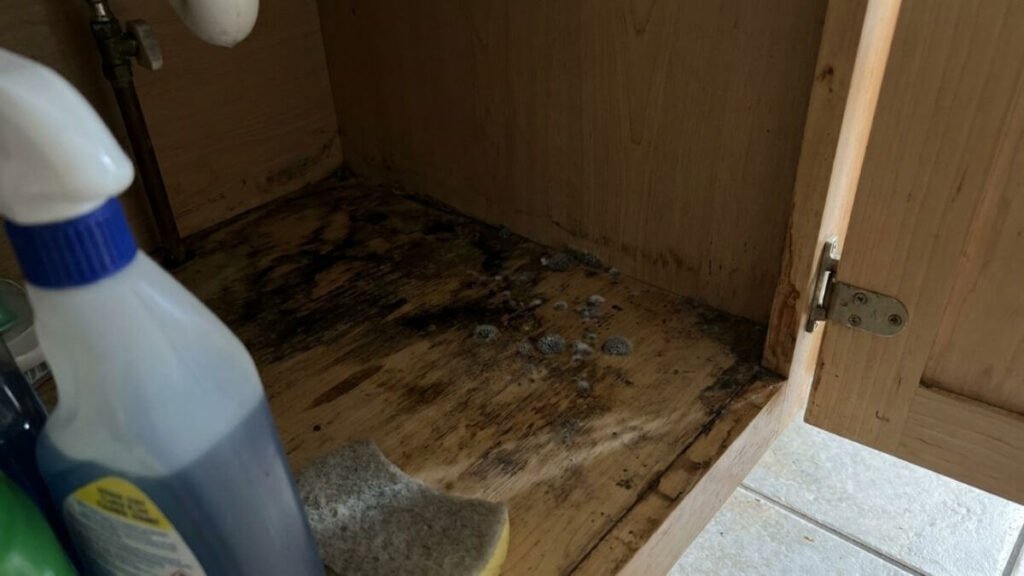
A Musty Smell Under Kitchen Sink That Gets Stronger When the Doors Open
This was the first clue for me. I would open the cabinet and get hit with that stale, earthy smell right away. Even when I could not see much at first, the odor told me moisture had been sitting there too long. When the smell gets stronger after the doors open, trapped damp air is often part of the problem.
Dark Spots, Fuzzy Patches, or Staining on the Cabinet Floor and Corners
After the smell, I started noticing small dark marks near the back corners and around the pipe area. Some looked like stains. Some looked a little fuzzy. Corners matter here because water tends to sit there longer and dry slower. If the marks keep spreading or start looking raised, I take them more seriously.
Soft Wood, Bubbling Laminate, or Swelling That Points to Water Damage Under Sink Cabinet
This sign is harder to ignore once you touch the surface. I pressed on the cabinet base, and it did not feel solid. In some spots, the laminate looked raised. In others, the wood felt swollen. That usually means moisture has done more than surface damage. When the material starts changing shape, I know the cabinet has stayed wet for too long.
Damp Paper Towels, Warped Shelf Liners, or Wet Items Stored Below
I also learned to pay attention to the small stuff. A warped liner, a damp sponge, or a cleaner bottle with moisture under it can reveal a problem early. If things under the sink keep feeling wet for no clear reason, I treat that as a warning sign right away. That usually means moisture is building up faster than the cabinet can dry.
How to Check Where the Moisture is Coming From Before You Clean Anything
Before I cleaned anything, I had to find the moisture source first. That step mattered most. If I skipped it, the problem would come back. Cleaning helps, but it does not solve the real issue if water is still getting in.
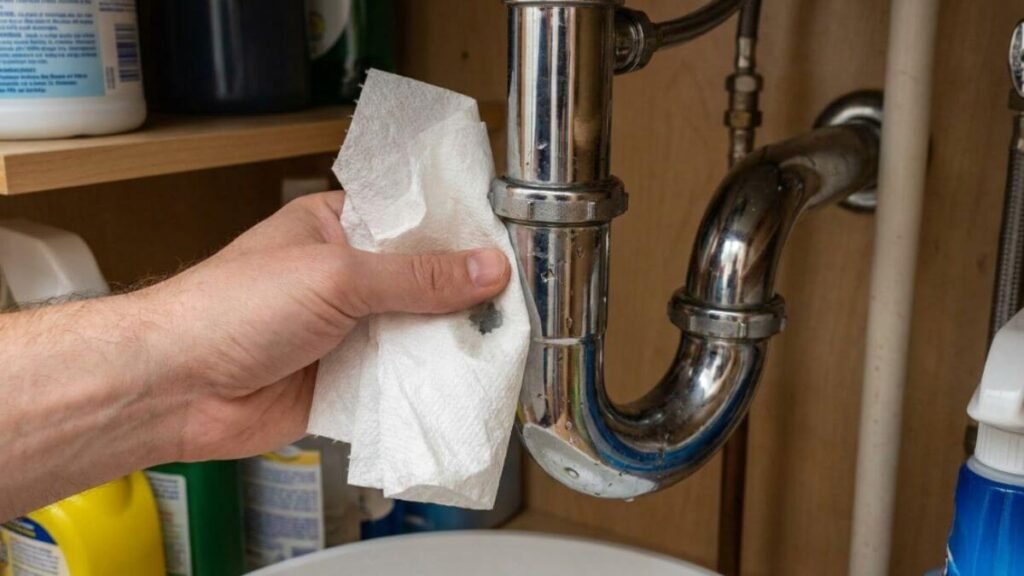
Check the Drain Pipe, P-trap, and Slip Joints for a Slow Drip
I started with the drain pipe and the p-trap because slow drips often hide there. I ran my fingers around the slip joints and looked for fresh drops. Sometimes I did not see an active drip right away, but the joint still felt wet. A dry paper towel helps here because it picks up moisture fast and shows where the drip starts.
Look Around the Faucet Supply Lines and Shutoff Valves
Next, I checked the water supply lines and shutoff valves. I looked for tiny beads of water, rust marks, or damp spots near the connections. A small leak there can stay hidden behind bottles and cleaning supplies for a long time. That is why I always move everything out of the way before I check that area.
Feel for Moisture on the Cabinet Base, Back Wall, and Side Panels
Then I touched the cabinet itself. I pressed my hand along the base, the back wall, and the side panels. This helped me find damp areas that my eyes missed. In one spot, the surface looked normal but felt cool and wet. That told me the moisture had spread farther than I first thought.
Test Whether the Leak Happens Only When Water Runs
I also turned the faucet on and off a few times. Then I drained the water and watched the pipes closely. This helped me tell the difference between a supply line leak and a drain leak. If water showed up only when I used the sink, that narrowed it down fast. That simple test saved me from guessing.
Watch for Condensation on Pipes in Hot Weather
On hot, humid days, I also checked for pipe sweat. Cold pipes can collect moisture even when nothing leaks. I noticed this more in warm weather, when the air under the sink felt sticky and the pipe surface turned damp. If the pipe keeps sweating and the cabinet stays closed, that moisture can keep feeding the problem.
When Mold Under the Cabinet is a Small Cleanup Job and When It is a Bigger Problem
Not every case of mold under the sink means the damage is severe. I learned that a small problem usually stays on the surface, while a bigger one shows deeper moisture damage, repeat mold, or a smell that spreads. The main thing I check is this: Does the cabinet still feel solid, and did the mold stop once the area dried?
Small Surface Mold on Hard, Non-porous Areas
I treat it as a smaller cleanup job when the mold stays limited and the surface still feels firm. This usually means I can clean it, dry it well, and watch it for a while.
Signs it is more likely a small cleanup job:
- The mold covers only a small area
- It sits on a sealed or hard surface
- The cabinet base still feels solid
- There is no strong smell outside the cabinet
- The moisture source is easy to spot and fix
Mold That Keeps Returning After Wiping
This is one of the clearest signs that the problem is bigger than it looks. If I wipe the area clean, dry it, and the mold comes back, I know something is still feeding it. That often means hidden moisture, trapped dampness, or a leak I did not fully catch the first time.
Water Damage Under Sink Cabinet That Has Weakened the Wood
Once the wood feels soft, swollen, or crumbly, I stop thinking of it as a simple cleaning job. I have pressed on cabinet bottoms that looked normal at first but gave way under my hand. That usually means the damage has gone past the surface.
Signs the Mold May Be Inside the Wall or Behind the Cabinet
I take the problem seriously when staining spreads. This happens at the back edge, around pipe openings, or in hard-to-reach places. If the visible mold seems small but the smell stays strong, mold may be hiding behind the panel or wall.
When the Smell Spreads Beyond the Sink Area
A smell that stays inside the cabinet is one thing. When that odor reaches the nearby kitchen area, I take it more seriously. That is usually when I know the problem is spreading.
What to Do First Before Cleaning Mold in the Cabinet
Before I cleaned anything, I made the area safe and dry first. That mattered more than the scrubbing part. If I rushed into cleaning while the cabinet was still wet and cluttered, I would only spread the mess and miss the real problem.
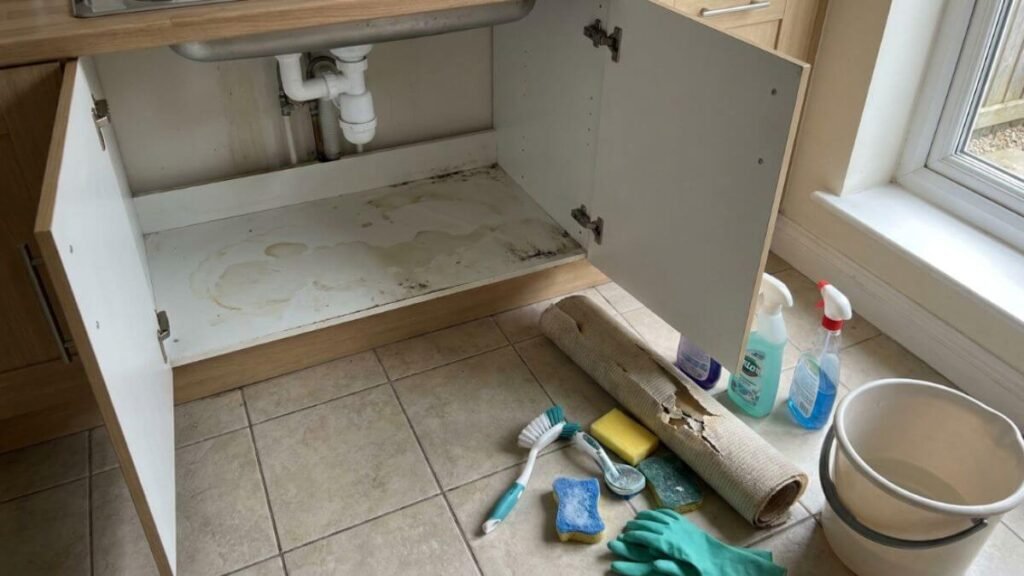
Empty the Cabinet Completely
I took everything out first. That gave me room to see the pipe area, the back corners, and the cabinet base clearly. It also helped me spot damp items I would have missed if I left bottles and supplies in place.
Throw Away Soaked Paper, Cardboard, or Badly Damaged Liners
I threw out anything that had soaked up moisture and stayed wet. Paper towels, cardboard, and badly damaged liners were not worth saving. Once those items get musty, they can keep holding odor and moisture in the cabinet.
Dry the Area as Much as Possible First
I always tried to dry the cabinet before I cleaned mold in cabinet surfaces. I wiped up standing moisture, pressed a dry cloth into corners, and gave the wet spots time to air out. A drier surface made it easier to see the real condition underneath.
Open Windows or Run a Fan for Airflow
I opened a window when I could, or I pointed a fan toward the cabinet. That simple step helped move out stale air and speed up drying. In my experience, a closed, damp cabinet stays musty much longer.
Wear Basic Protection Like Gloves and a Mask
I did not treat this like a huge hazard, but I still used basic protection. Gloves kept the mess off my hands, and a mask helped when the smell felt strong. That small step made the cleanup feel easier and more controlled.
How to Clean Mold in Cabinet Surfaces Without Making a Mess
I learned to keep this part simple. The goal was not to soak the cabinet or scrub in a rush. I got better results when I cleaned in order, used the right cleaner, and dried everything fully before putting anything back.
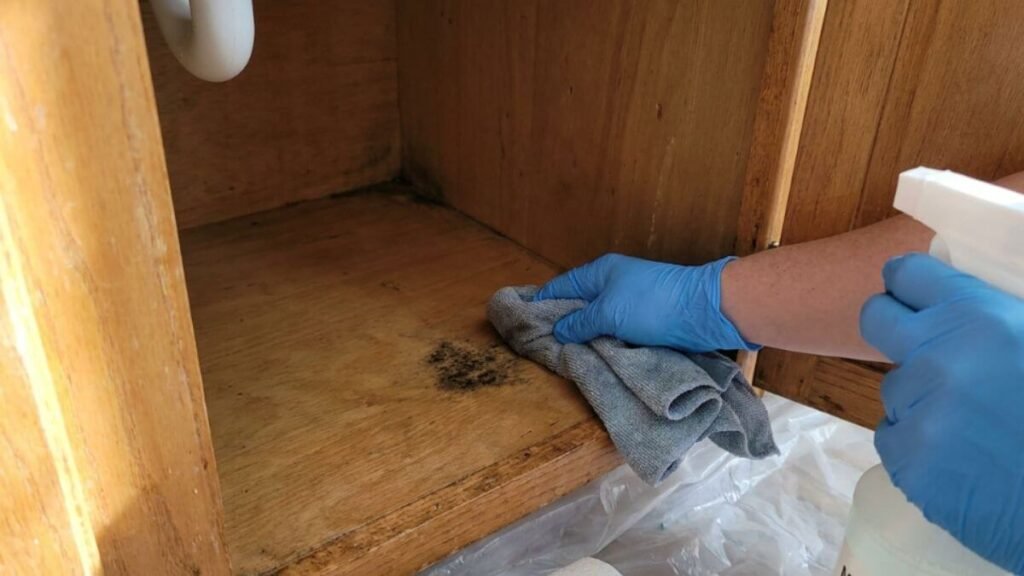
Wipe Loose Dust and Debris First
I always started with the loose mess first, because that made the rest of the cleaning easier. Before I used any cleaner, I removed:
- loose dust
- crumbs
- flaky debris
- bits of damaged liner
- dirt around the pipe area
That kept me from smearing grime deeper into the surface.
Use the Right Cleaner for Sealed Wood, Laminate, or Hard Surfaces
I matched the cleaner to the cabinet material. Sealed wood, laminate, and hard surfaces can handle moisture differently. I used enough cleaner to wipe the mold, but not so much that the cabinet stayed soaking wet.
The main things I paid attention to were:
- Use a cleaner that suits the surface
- Avoid oversoaking the cabinet
- Do not let liquid sit on the base panel
- Keep pressed wood and weak spots as dry as possible
Scrub Gently Into Corners, Edges, and Around Pipe Openings
I cleaned the tight spots with extra care because mold and grime tend to stay there. I used a soft cloth or a small brush and worked gently into the edges and corners. Rough scrubbing did not help much. Gentle cleaning gave me better control and caused less mess.
Dry the Cabinet Fully After Cleaning
This step mattered as much as the cleaning itself. I wiped the surface dry and left the cabinet open so trapped moisture could escape. If the area still felt cool or damp, I gave it more time before doing anything else.
Replace Wet Liners Only After the Area Is Fully Dry
I never rushed this part. If I put liners or stored items back too soon, the cabinet stayed damp, and the musty smell returned faster. I waited until the whole area felt fully dry before I replaced anything.
What to Do if the Cabinet Material Is Swollen, Crumbly, or Permanently Stained
When the cabinet material starts swelling, crumbling, or holding a dark stain, I stop treating it like a simple cleaning issue. At that point, I check whether the cabinet still feels solid, whether the damage stays on the surface, and whether moisture is still getting in. That tells me if I can improve it or if part of the cabinet needs repair.
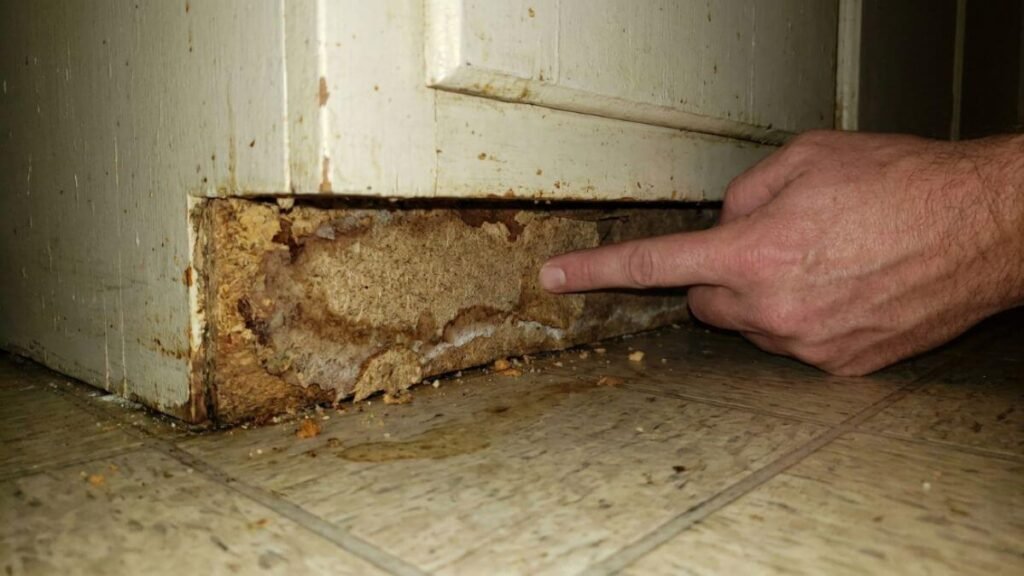
How to Tell if the Base Panel Is Structurally Weak
I press gently on the cabinet bottom and pay attention to how it feels. If it bends, feels soft, flakes, or sinks under light pressure, I treat that as real damage, not a stain. These signs usually tell me the material has stayed wet for too long:
- soft spots
- swelling at the edges
- crumbly particleboard
- sagging under stored items
When Sanding or Repainting Makes Sense
I only consider sanding or repainting when the surface is dry, firm, and mostly cosmetic. If the stain stays on top and the panel still feels strong, that kind of fix can make sense. I do not do this while moisture is still present, because the problem shows up again.
When a Damaged Shelf or Cabinet Bottom May Need Replacement
If the shelf or base panel seems weak, warped, or breaking, it is better to replace it than to try to fix it. I have seen cabinets look decent from above, but crumble once I touch the bottom. When the structure is gone, cleaning alone will not fix it.
Why Covering the Stain Without Fixing the Moisture Never Works for Long
I learned this the hard way. If I cover the stain but ignore the leak, condensation, or trapped dampness, the smell and damage come back. The stain is often the symptom. The moisture is the real problem.
How to Get Rid of the Musty Smell Under Kitchen Sink After Cleaning
I learned that the smell does not go away just because the surface looks clean. If the area stays even a little damp, the musty odor can hang on. What helped me the most was drying longer, checking hidden spots, and tackling anything under the sink that had soaked up the smell.
Drying the Area Longer Than You Think You Need to
This made the biggest difference for me. I left the cabinet open longer than I first planned. I wiped it again, felt the corners by hand, and waited until nothing felt cool or damp. A cabinet can look dry before it is actually dry.
Washing or Replacing Stored Items That Absorbed the Smell
I noticed that some of the smell was not coming from the cabinet anymore. It was coming from the things I had stored inside. Sponges, old bottles, paper goods, and liners can hold that odor. I washed what I could and threw out anything that still smelled musty.
Use Odor Absorbers Only After Moisture Is Under Control
I only used odor absorbers after I got the moisture under control. Before that, they did not solve much. They only covered the smell for a while. What worked better for me was this:
- Dry the cabinet first
- Fix the leak or damp source
- Use odor absorbers only at the end
Checking for Hidden Damp Spots Behind Supplies and in Back Corners
I also checked the back corners, the pipe openings, and the spots behind stored items. That is where I kept finding leftover dampness. If the musty smell under kitchen sink came back after cleaning, one of those hidden spots was usually the reason.
Simple Ways to Prevent Mold Under Sink Cabinet From Coming Back
I learned that prevention mostly comes down to keeping the space dry and catching small problems early. After I began a few simple habits each week, the cabinet stayed cleaner and drier. It also became less likely to develop that musty smell.
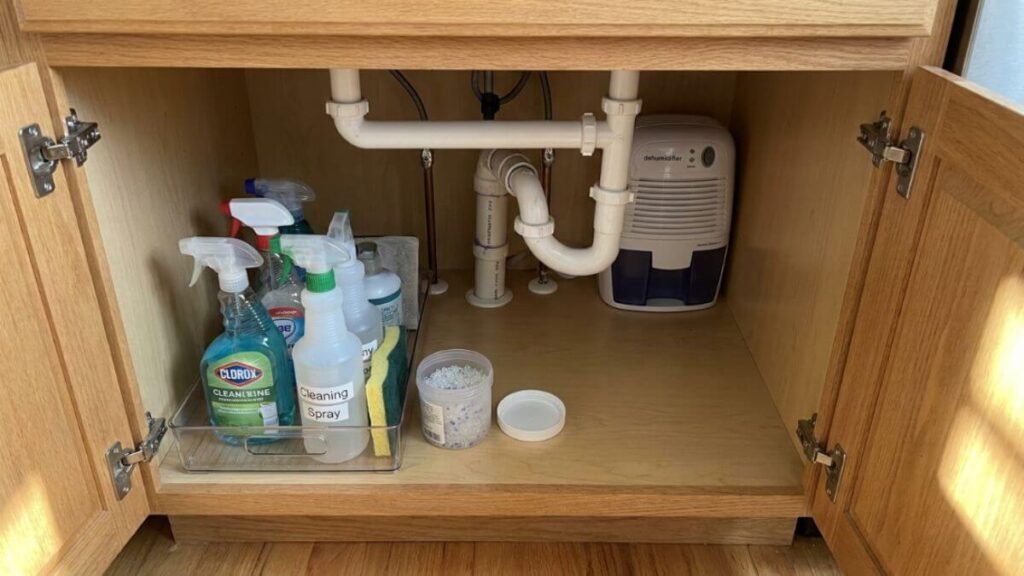
Fix Even a Tiny Leak Under Kitchen Sink Right Away
I stopped ignoring small drips once I saw how much damage they could cause. A slow leak under kitchen sink can keep the cabinet damp for days without making a big puddle. The sooner I fixed it, the easier it was to prevent mold from coming back.
Keep Cleaning Products in Trays Instead of Directly on the Cabinet Floor
I started placing bottles in simple trays instead of setting them straight on the cabinet base. That helped catch drips, leaks, and cleaner residue before they soaked into the surface. It also made the cabinet easier to wipe out.
Leave a Little Space Around Pipes for Airflow
I used to pack the area too tightly. Once I left a little open space around the pipes, the cabinet dried faster and felt less stuffy. That small gap helped air move better through the space.
Wipe Up Drips After Dishwashing or Floor Mopping
I learned that not all moisture comes from plumbing. Water from dishwashing, wet hands, or floor mopping can also end up under the sink. I started wiping those drips right away instead of letting them sit.
Check the Cabinet on a Regular Day Each Week
This helped me more than I expected. I picked one regular day each week and opened the cabinet to look, touch, and smell. That made it easier to catch damp spots early.
Use a Moisture-Resistant Liner if the Cabinet Is Fully Dry
I only use a liner after the cabinet is fully dry and the moisture source is under control. When I do use one, I choose a moisture-resistant liner that is easy to lift and clean. That works much better than trapping moisture under a damaged liner.
Common Mistakes That Make Mold Under the Sink Worse
I made the problem worse a few times before I understood what was actually helping. Most of the mistakes came down to one issue. I let moisture stay trapped under the sink for too long. Once I fixed those habits, the cabinet became much easier to manage.
Cleaning Before Fixing the Moisture Source
This was one of my biggest mistakes. I cleaned the surface first and expected the problem to end there. But if the leak, condensation, or damp spot was still there, the cabinet only looked better for a short time.
Shutting the Cabinet Door While Everything Is Still Damp
I also learned not to close the cabinet too soon. When I shut the doors while the area still felt damp, the air stayed stale and the surface dried much more slowly. That gave the musty smell a chance to stay longer.
Storing Wet Rags, Sponges, or Bottles Underneath
This mistake seemed small, but it kept adding moisture back into the cabinet. A damp sponge, a wet rag, or a bottle with cleaner residue underneath can make the space stay wet longer than expected.
Ignoring a Musty Smell Because There Is No Visible Leak
I learned not to trust my eyes alone. Sometimes I could not see a drip, but the smell told me something was still wrong. Later, I often found hidden moisture in the back corners, around pipe openings, or behind stored items.
Using Too Much Liquid on Pressed Wood or Particleboard
More cleaner did not help. On pressed wood or particleboard, too much liquid can make the cabinet swell, soften, or break down faster. I got better results when I used less moisture and dried the area right away.
| Mistake | What I learned from it |
| Cleaning before fixing the moisture source | Surface cleaning does not solve the problem if water is still getting in. |
| Shutting the cabinet door while everything is still damp | Trapped damp air slows drying and keeps the smell around. |
| Storing wet rags, sponges, or bottles underneath | Small wet items can keep feeding moisture under the sink. |
| Ignoring a musty smell because there is no visible leak | Hidden moisture can be present even when I cannot see a drip. |
| Using too much liquid on pressed wood or particleboard | Too much cleaner can make weak cabinet material worse. |
That is why I stopped focusing only on visible mold. I started paying more attention to moisture, airflow, and the small habits under the sink. Once I changed those, the cabinet stayed drier and easier to manage.
Frequently Asked Questions
Is mold under a kitchen sink cabinet dangerous?
It can become a problem if it keeps spreading or the cabinet stays damp for too long. I do not ignore it, even when the area looks small at first.
Can I clean it myself or should I call a professional?
I clean it myself when the mold is small and the surface still feels solid. I call for help when it keeps coming back or the cabinet starts to feel weak.
Why does the cabinet smell musty even after I wiped it down?
That usually means moisture is still trapped somewhere under the sink. A clean-looking surface does not always mean the area is fully dry.
Will mold come back after I fix the leak but the wood still looks stained?
Not always. The wood can still look stained even after I fix the leak. What matters more is whether the area stays dry and the smell does not come back.
How often should I check under the sink for moisture?
I like to check it once a week so I can catch damp spots early. That small habit makes it easier to stop bigger problems later.
Conclusion
In my experience, mold under kitchen sink cabinet problems usually begin with moisture that stays hidden for too long. I learned that wiping the surface is not enough if the leak, condensation, or damp spot is still there.
The real fix was to find the source, dry the cabinet well, clean it properly, and check whether the material had already started to weaken. Small problems are often manageable when I catch them early, but repeated mold and serious water damage are never something I leave alone.