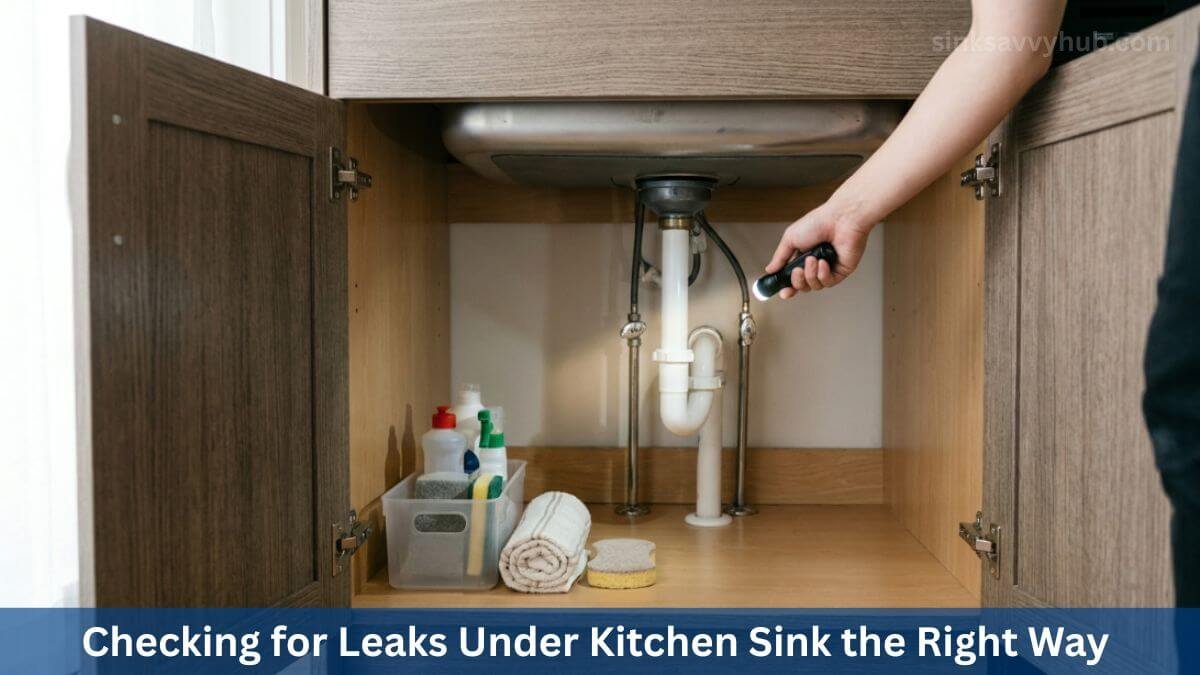

I fix plumbing issues often, and checking for leaks under kitchen sink cabinets is a step many people skip. You close the dark door and assume the pipes are fine. But a slow, hidden drip makes the wood base soft over time. Changing temperatures can make older joints loosen, and the dark space hides the water well.
A bright flashlight and a dry paper towel are usually all you need to spot the problem. I always check the hot and cold water lines first before looking at the drain. I will show you how to find a quiet drip early so you can keep your cabinet floor completely dry.
Why Kitchen Sink Leaks Stay Hidden for So Long
Kitchen sink leaks stay hidden because slow drips soak silently into the wood in dark, crowded spaces. A casual glance usually misses the dampness completely.
Last winter, I found a hidden leak behind a stack of old sponges that ran quietly for months. You can easily miss it until the damage is already there.
The Cabinet Design Works Against Early Detection
Dark corners and crowded storage block your view of the deep pipes. You only open the doors to grab soap, so the back wall stays hidden.
Drain pipes and shutoff valves sit deep in the shadows. A tiny drip falls onto the bare particleboard and dries up fast. You rarely see standing water until the wood actually starts to swell.
Slow Drips Look Nothing Like a Leak
A slow plumbing seep leaves a tiny damp patch instead of a large puddle. People expect to see a lot of water, so they miss the small signs.
A loose compression fitting might only weep when you run the tap. The pressed wood drinks the water and dries out quickly when the faucet stops. You usually spot dark water stains or smell a musty odor first.
What to Do Before Starting the Inspection
Empty the cabinet and grab a bright light before you check the pipes. Good preparation ensures you catch a tiny, hidden drip.
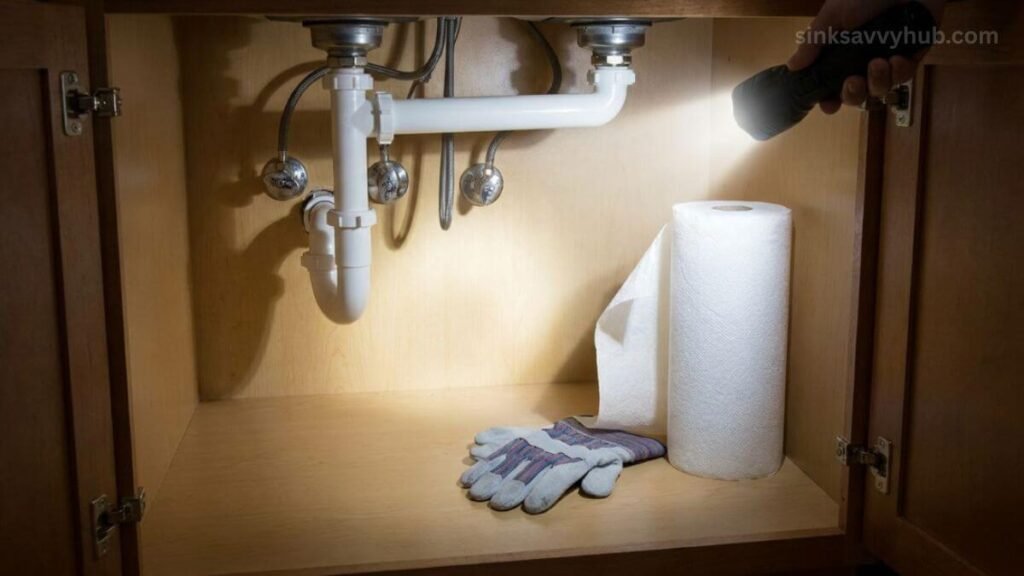
Last month, I skipped emptying the soap bins and completely missed a wet supply line. Now, I always set up my workspace first.
- Clear the space: Pull out every bottle so you can clearly see the deep back wall.
- Grab dry towels: Keep dry white paper towels handy. They soak up small drops your eyes might miss.
- Use a strong light: Sink corners stay pitch black. You need a bright flashlight to see quiet seeps.
- Run the tap: Turn the water on high for a minute. Some old plastic joints only weep under pressure.
Taking these quick steps makes the job much easier. You save time and frustration when you can actually see the bare metal pipes.
Kitchen Sink Supply Line Leak Signs – Checking the Water Supply Connections
Kitchen sink supply line leak signs usually start with tiny wet spots on your hot and cold hoses. These lines hold high water pressure, so a failing hose can cause serious water damage.
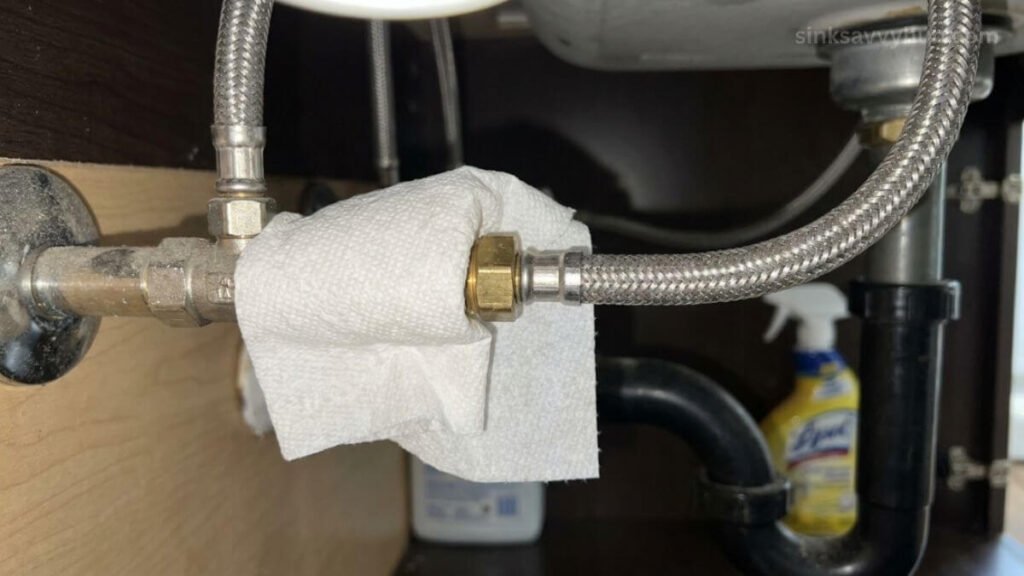
I check these fresh water lines before looking at the dirty drain. High pressure means even a tiny pinhole spray wets the cabinet walls quickly.
Where to Look on the Supply Lines
You have two lines feeding water to your sink. Follow both the hot and cold hoses from the back wall valves straight up to the faucet.
Wrap your dry paper towel around three spots: the bottom valve, the middle of the hose, and the top nut. Hold the paper tight for five seconds. Any dampness on the white paper points to an active drip.
What Worn or Failing Supply Lines Look Like
Sometimes a line is failing even if it feels completely dry today. Look closely for visual clues that the metal or rubber is breaking down.
- Rust spots: Red marks on a braided metal hose mean the hidden inner rubber tube is breaking down.
- White crust: Hard mineral buildup around the metal nuts shows a slow, long-term water seep.
- Stiff bends: Hoses that feel hard, kinked, or cracked need replacement.
- Old age: Supply lines older than eight years have a higher chance of failing.
Catching these physical warning signs early saves you from a sudden burst pipe.
Kitchen Sink P-Trap Leak Inspection – Checking the Drain Side
You check the drain pipes while the water runs to find slow leaks. These pipes do not hold heavy pressure, so they only drip when you actually wash dishes. I often see loose plastic nuts causing quiet water damage here.
The P-Trap and What to Check
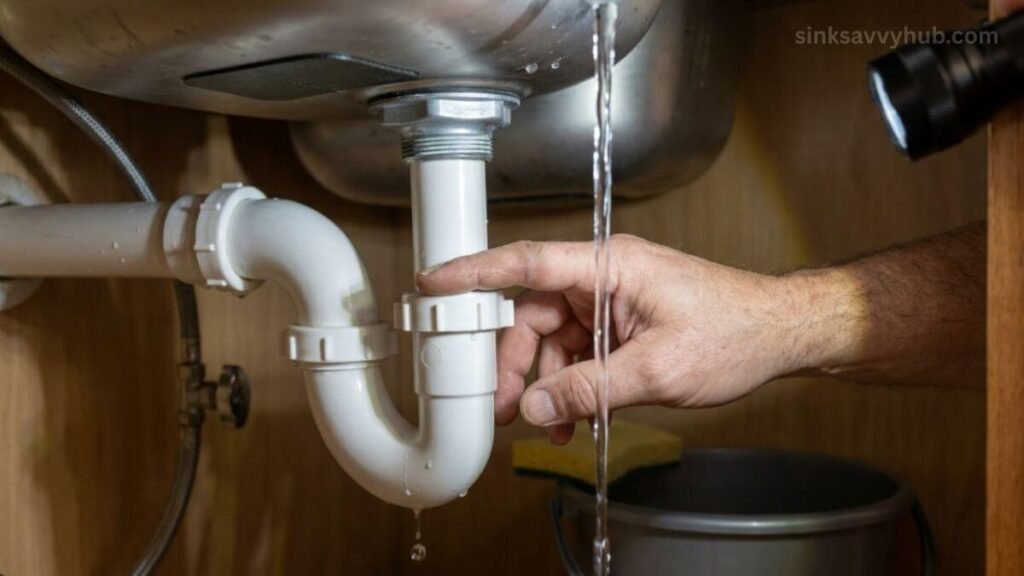
The P-trap is the curved pipe under your drain, and its plastic joints loosen over time. You need to check the nuts at both ends of this deep curve.
Turn your kitchen tap on high. Wipe your dry finger around each plastic slip joint. If your finger gets wet, the vibration from daily use has loosened the seal.
The Drain Tailpiece and Basket Strainer
Watch the straight pipe under the sink bowl to catch failing basket strainer seals. Water often sneaks down the outside of this tailpiece instead of staying inside the pipe.
Look closely at the metal drain body with your bright flashlight. A vertical water stain on the plastic pipe means the top putty seal is failing.
Where the Drain Pipe Meets the Wall
Shine your light at the back cabinet wall where the pipe goes into the drywall. Old rubber boots and wall fittings crack as your house settles.
Look for dark water stains on the bare drywall, chalky mineral buildup around the pipe hole, or crumbly cabinet base wood. Finding a wall leak fast keeps the damage small.
How to Find a Slow Drip Under Kitchen Sink That Isn’t Obvious
You find a hidden drip by running the water on high for three minutes and pressing dry paper against every single joint. Some leaks only show up when the pipes are under heavy water flow.
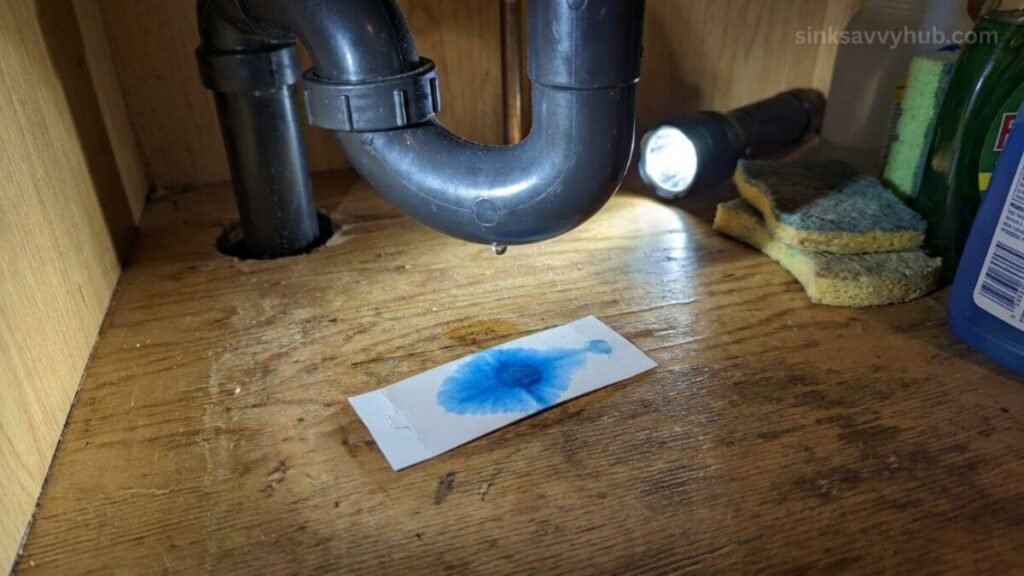
Last weekend, I stared at a completely dry pipe for ten minutes even though I smelled damp wood. I finally ran the hot water on full blast, and the hidden leak showed up.
The Paper Towel Method Done Properly
Dry the entire cabinet floor and wipe down all the metal and plastic pipes first. You need a completely dry starting point to catch a tiny drop of water.
Turn your kitchen tap on full pressure and let it run for three full minutes. Open the dark cabinet and press a dry paper towel against each connection before the water evaporates. The white paper shows the wet spot instantly.
Using Leak Detection Strips or Sensors
Place cheap leak detection strips right under the pipes to catch drips when you are not looking. These small paper strips change color the second water touches them.
You can also buy a tiny wireless leak sensor for the deep back corner of your cabinet. They alert your phone if water hits the floor overnight and work great for catching leaks during heavy dishwasher use.
Under Sink Water Damage Early Detection – Reading What the Cabinet Is Telling You
You spot early water damage by looking for dark stains, feeling for soft wood, and smelling for mold. Your bare cabinet will show clear signs of moisture even when the actual pipe leak hides from view.
Last fall, I missed a tiny pipe drip but noticed my cheap plastic liner bubbling up. I touched the baseboard underneath and felt soft, crumbly wood.
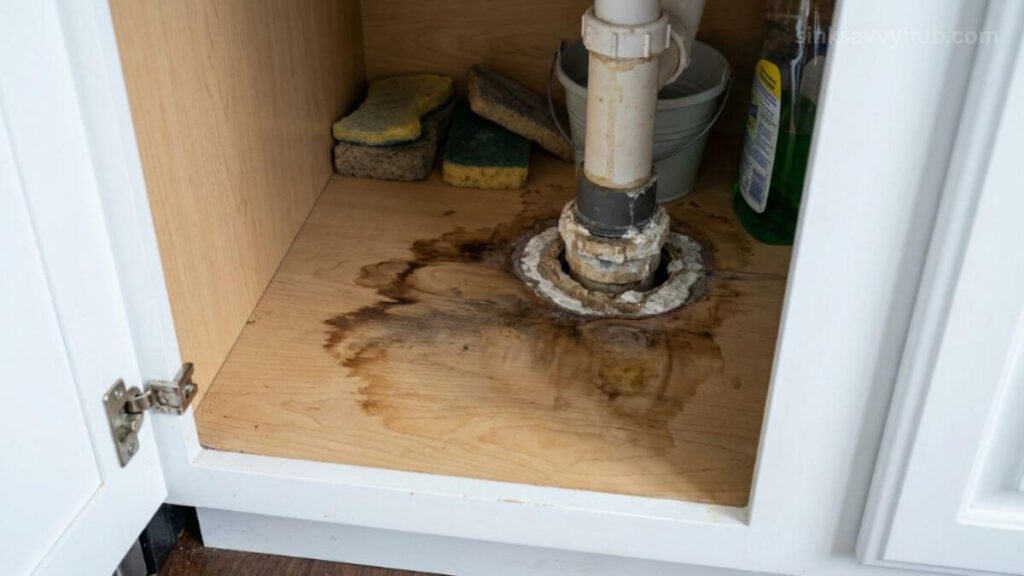
Look for these specific warnings inside your dark cabinet:
- Spongy floors: Pressed wood swells and feels soft when wet.
- Dark corners: Water runs low and leaves permanent dark stains.
- White crust: Chalky pipe mineral buildup proves water sat there.
- Peeling liners: Trapped moisture lifts the glue right off the wood.
- Musty smells: A dirty odor means mold is starting to grow inside.
Finding any of these quiet signs means water is already trapped. You need to locate the hidden leak and dry the bare wood.
When to Call a Plumber for a Sink Leak Instead of Fixing It Yourself
Get professional help when the leak is inside the wall or around a damaged main valve. Minor joint drips are easy to fix, but high-pressure plumbing issues need a real pro.
Repairs That Need a Licensed Plumber
I once tried to tighten a rusted valve myself, and it cracked. Call an expert for these major problems:
- Cracked lines: Old rubber hoses that show deep wear.
- Wall leaks: Water coming from the drywall needs deep structural repair.
- Broken valves: A main shutoff valve that drips needs full replacement.
- Heavy mold: Thick mold on wall frames requires safe removal.
Messing with these big issues yourself can flood your kitchen. Paying an expert protects your floors.
What to Do While Waiting for a Plumber
You should stop the water flow while help is coming. Turn the metal shutoff valves clockwise to shut the water off completely.
Put a bucket under the drip to catch the mess. Snap a photo of the wet pipes on your phone. Showing this clear picture helps the plumber understand the problem faster.
Frequently Asked Questions
How do I start checking for leaks under the sink?
Pull everything out of the cabinet so you can see the back wall clearly. Use a bright flashlight and press a dry paper towel against every pipe joint while the water runs.
What are the signs of a failing supply line?
Look for red rust marks on braided metal hoses or hard white mineral crust around the metal nuts. If the hose feels stiff or kinked, it is starting to fail.
How do you inspect a sink drain for leaks?
Turn the tap on high and let it run. Wipe a dry finger or paper towel around the plastic nuts on the curved P-trap pipe to feel for any fresh moisture.
How do I find a drip that is hard to see?
Dry all the pipes first, then run the water on full blast for three minutes. Press a dry paper towel on the connections to catch tiny drops before they evaporate.
Why is catching cabinet water damage early important?
Finding a wet spot early keeps your repair costs very low. If you let it sit, the pressed wood base rots, and you have to replace the whole cabinet floor.
A Quick Check Can Prevent Bigger Water Damage
Checking for leaks under the kitchen sink correctly takes ten minutes. Clear the space, run the water, and press a dry paper towel on every joint.
Checking my own sink recently caught a small hose leak before it ruined my wood floor. That simple habit goes a long way.
Do this simple look once every few months. Finding a slow drip early costs very little to fix, while waiting until the floor rots costs much more.