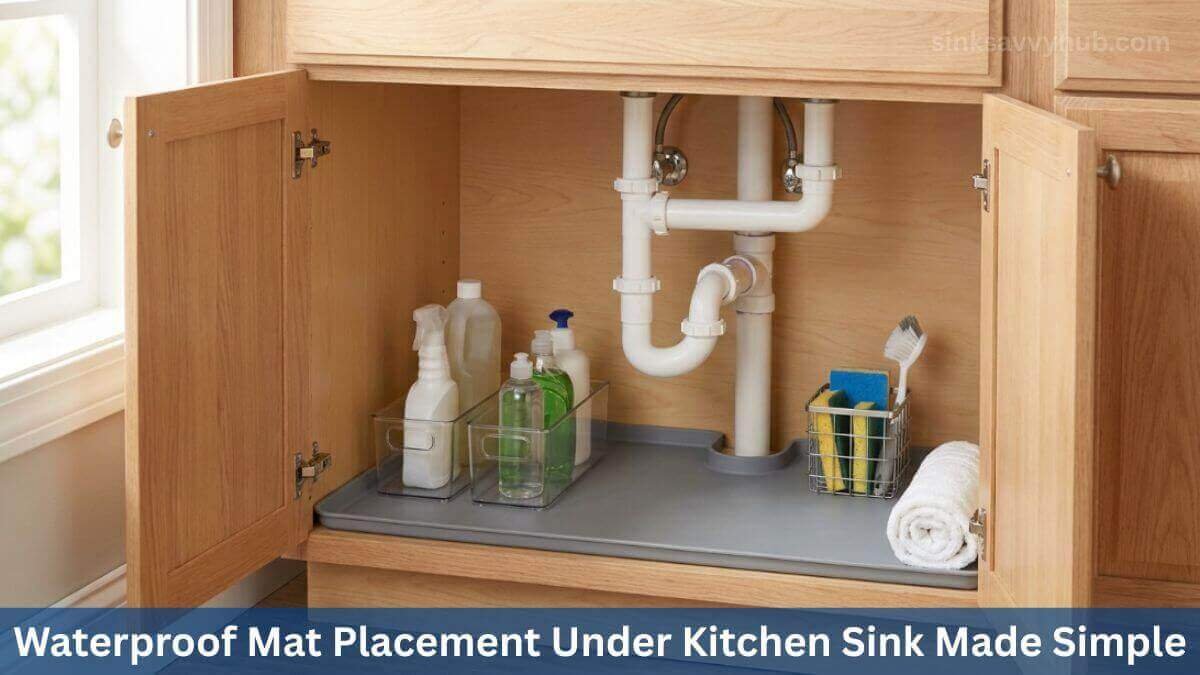

Most folks wait for a leak to fix their sink base. I did that once. It was a huge mess. Now, I know much better. Good waterproof mat placement under kitchen sink spaces saves you time and cash.
I have put these thick mats in wet Florida homes. I have used them in cold Midwest spots where pipes freeze and burst. The right mat keeps your wood dry and safe. It stops bad mold fast.
In this post, I will share the top mats like WeatherTech and Gorilla Grip. We will look at tough silicone and thick PVC types. A snug fit means no wood rot. High rims hold back big spills. Strong mats give you real peace of mind. Cleanups are so quick. You wipe the top. Let us find the best fit for your house right now. You will love how safe your sink feels.
Why the Under Sink Cabinet Floor Needs More Protection Than People Realize
Your cabinet base rots because it sits in a dark, damp space. Standard wood turns soft when it faces small, steady drips.
Last summer, I reached under my sink for a brush, and my hand hit a wet spot on the base. A quiet drip was ruining the wood. Finding hidden damage feels incredibly frustrating.
What’s Actually Happening Under There
This dark area stays very damp. Cold metal supply lines sweat drops of water on hot days. Plastic drain fittings develop slow leaks over time. You spill dish soap, shut the door, and forget about it.
Factory wood floors absorb this hidden water. You do not notice the damage until the board breaks apart. A thick moisture barrier stops this rot right at the start.
Why a Mat Works Better Than Wiping Things Down
Wiping the base with a dry towel feels like a good fix. It misses the water soaking deep into the wood grain.
A rubber mat catches those unseen drops. It stays in place and protects the bare surface underneath. You get a dry space instead of a growing mold issue.
Choosing the Right Waterproof Mat Before Placing Anything
Selecting the right material matters most. Not every mat handles wet spots well. Thick edges and exact sizing matter more than a low price.
Material Options and What Each One Does
You have a few main choices when shopping for a cabinet liner.
- PVC or vinyl sheets: Fully waterproof and simple to wipe clean. This is my top pick.
- Rubber mats: Heavy and tough, but harder to trim around thick pipes.
- EVA foam mats: Soft and easy to cut. It traps water underneath if the fit stays loose.
- Felt-backed mats: Skip these. The soft fabric absorbs active drips and grows mold.
Picking a solid material like PVC saves you from replacing a ruined mat later. It blocks the water completely and keeps the wood safe.
Edge Design Matters for Leak Containment
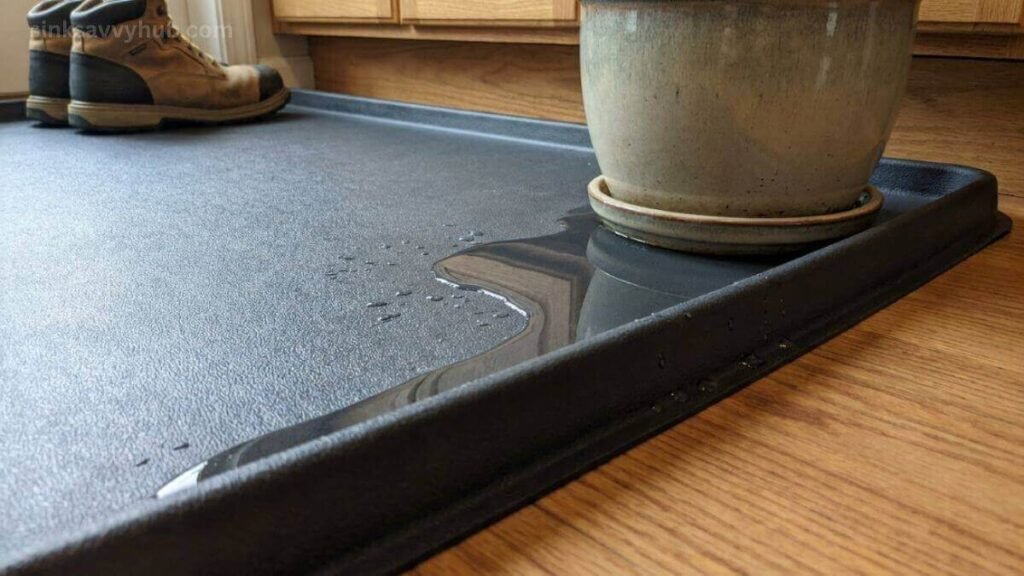
A flat sheet handles small spills. A mat with tall raised edges acts like a catch tray. For solid leak protection, a lipped mat holds back active drips until you spot them. I always use tray-style liners under older pipes.
Sizing – Why Bigger Is Not Always Better
A huge mat folds up against your wood walls. Those folds create hidden pockets where water pools. A tiny mat leaves bare wood exposed in the deep corners. Measure your exact interior floor space before you buy anything.
How to Measure for Accurate Waterproof Mat Placement Under Kitchen Sink
Setting up an under-sink mat needs exact numbers, not a quick guess. You must measure the width, the depth, and the pipe gaps to get a tight fit.
Last Saturday, I tried to guess a cut for a new mat. I left a wide gap near the back pipe. Wood cabinet bases are almost never exact squares.
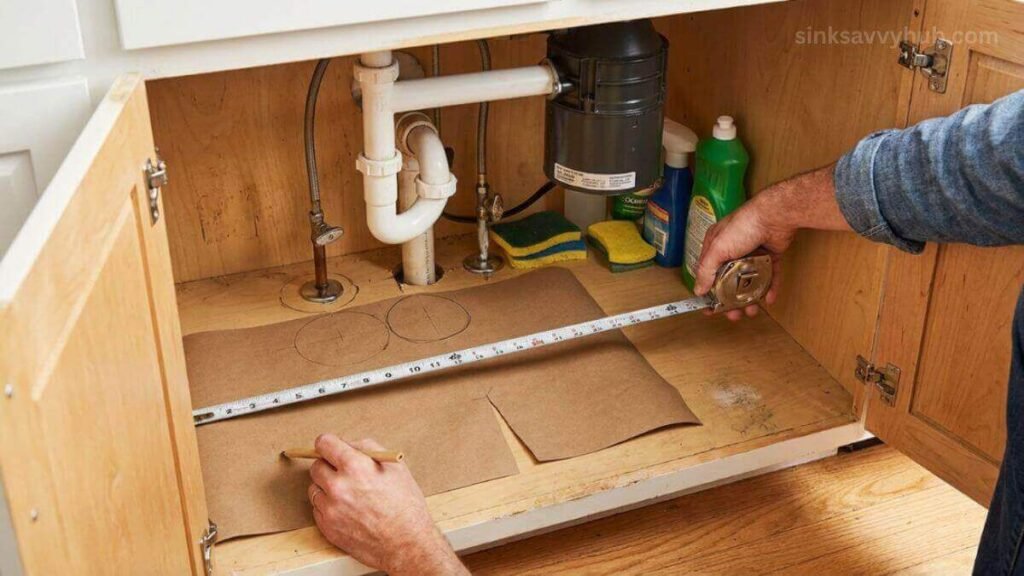
Grab a metal tape and check these spots:
- Measure the inside width at the front edge, the middle, and the deep back.
- Measure the full depth from the front door straight to the back wood wall.
- Mark exactly where your drain pipes and water hoses touch the floor.
Taking accurate numbers makes the next cutting step simple. I use a simple paper trick before cutting thick rubber. Grab some thin kraft paper and press it into the bare base. Trace the floor edges and cut the round pipe holes out of the paper first.
Take that flat paper shape and lay it over your heavy mat. Trace the lines with a pencil, then cut the thick rubber. A paper guide prevents a bad cut.
How to Fit Mat Around Sink Pipes Without Leaving Gaps
To stop water from slipping past your rubber mat, you must cut tight holes and seal the back edges. A sloppy cut leaves the wood exposed. I once rushed a cut with a dull knife. A jagged gap let soapy water soak into the wood base.
The Two Main Cutting Approaches
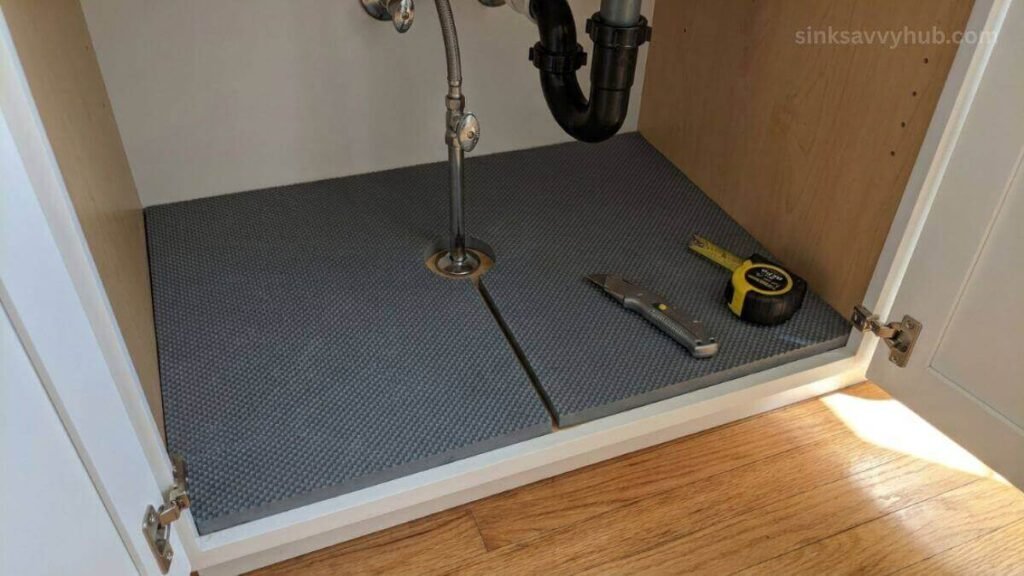
You can use two simple ways to get the heavy rubber around your plumbing.
- The slit method: Cut a straight line from the back edge to the pipe, then cut a small circle. You slide the mat around the metal hose.
- The cutout method: Cut a full round circle right in the mat. You take the pipe off, drop the mat flat, and connect the pipe back. This creates a cleaner finish.
Choosing the correct cut helps your thick mat sit perfectly flat against the wood base.
Getting the Pipe Hole Size Right
Make your pipe holes a quarter inch smaller than the actual tube. The thick rubber stretches to hug the cold pipe.
A tight fit stops water drops from sneaking down into the bare wood. A loose hole leaves the floor unprotected.
What to Do With Gaps Around the Cabinet Edges
Even a great cut leaves tiny gaps near the back wood wall. Push the mat flat against the deep corners with your hands.
Run a thin line of clear silicone caulk along that back edge. This keeps moisture out. This simple step finishes your cabinet setup.
Placing the Mat Correctly to Protect Cabinet Floor From Water Damage
To protect your wood, press your cut mat perfectly flat against the bare base. A properly placed leak mat keeps liquid on top.
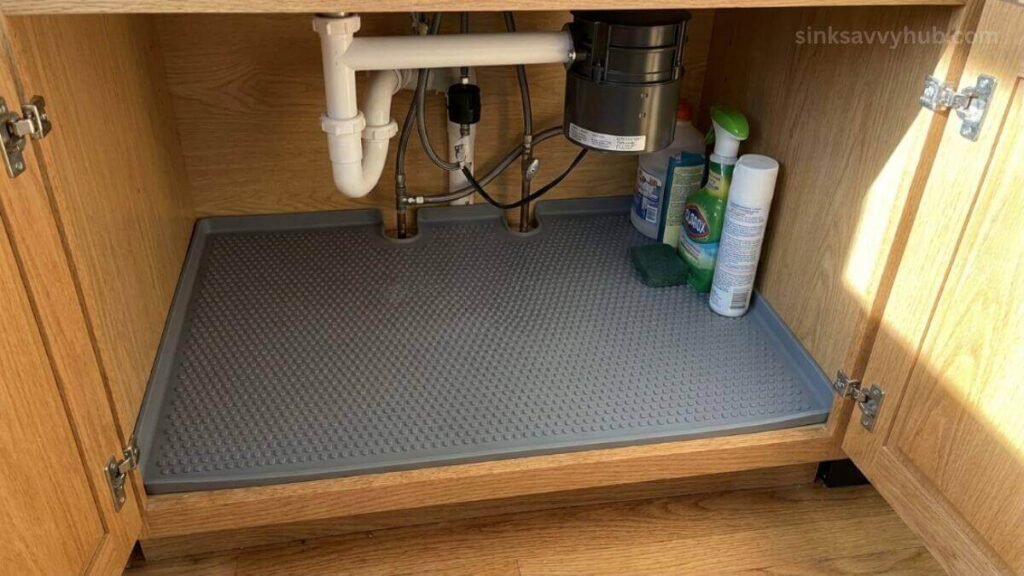
If you leave curled edges or trapped air bubbles, water flows underneath the rubber. I use my hands to push the mat flat. I press down and move from the middle straight to the outside edges.
If you bought a tray-style mat, check the tall side lips. These raised edges must sit flush against your wood walls. If a thick lip folds inward, spilled water slips past it.
A loose mat shifts when you slide heavy boxes onto it. I stick small strips of double-sided tape under the front corners. This holds the rubber in place but lets you pull it out for cleaning.
Keeping the Mat Working Long-Term
Pull your mat out every few weeks to check the bare wood underneath. An under-sink liner only protects your floor if the rubber stays whole.
Last month, I pulled my mat to wipe up spilled soap and found a small tear. The thick plastic looked fine on top, but the hidden side was peeling.
- Look underneath: Pull the mat out monthly to catch slow drips in the dark.
- Dry it off: Wipe the thick rubber and the wood completely dry.
- Check your pipes: Look at the metal hoses while the space is clear.
- Know when to replace: Buy a new mat if the raised edges curl.
Taking five minutes to check your setup keeps the wood safe. A torn mat lets water through, so swap it out before a leak happens.
Frequently Asked Questions
What is the best material to use under my sink?
A thick PVC or vinyl sheet works best. These materials block water well and wipe clean easily. Avoid cheap foam that traps moisture.
How do I measure my cabinet for a new rubber mat?
Measure the inside width and depth with a metal tape. Mark exactly where the pipes touch the floor. Exact measurements stop bad gaps.
Does a tray style mat stop large water spills?
Yes, a mat with raised side lips holds back big spills. The tall edges catch the liquid before it reaches your bare wood.
How do I cut the rubber mat around my thick pipes?
Cut a small circle slightly smaller than the pipe. A snug fit stretches over the pipe and stops drips from reaching the wood.
How often should I check my leak protection mat?
Pull the mat out once a month to check the wood underneath. Wipe the surface dry and look for new pipe drips while the space is clear.
A Small Step That Protects a Spot Most People Forget
Putting a good mat under your kitchen sink stops hidden rot before it starts. This one flat layer protects your cabinet base.
Last Friday, I closed the cabinet doors under my New Jersey sink and smiled. I felt confident knowing the thick rubber mat was ready to catch the next pipe drip.
You can finish this project in one short afternoon. Cut your thick mat tight around the pipes and press the edges flat. Doing it right today keeps your wood safe.