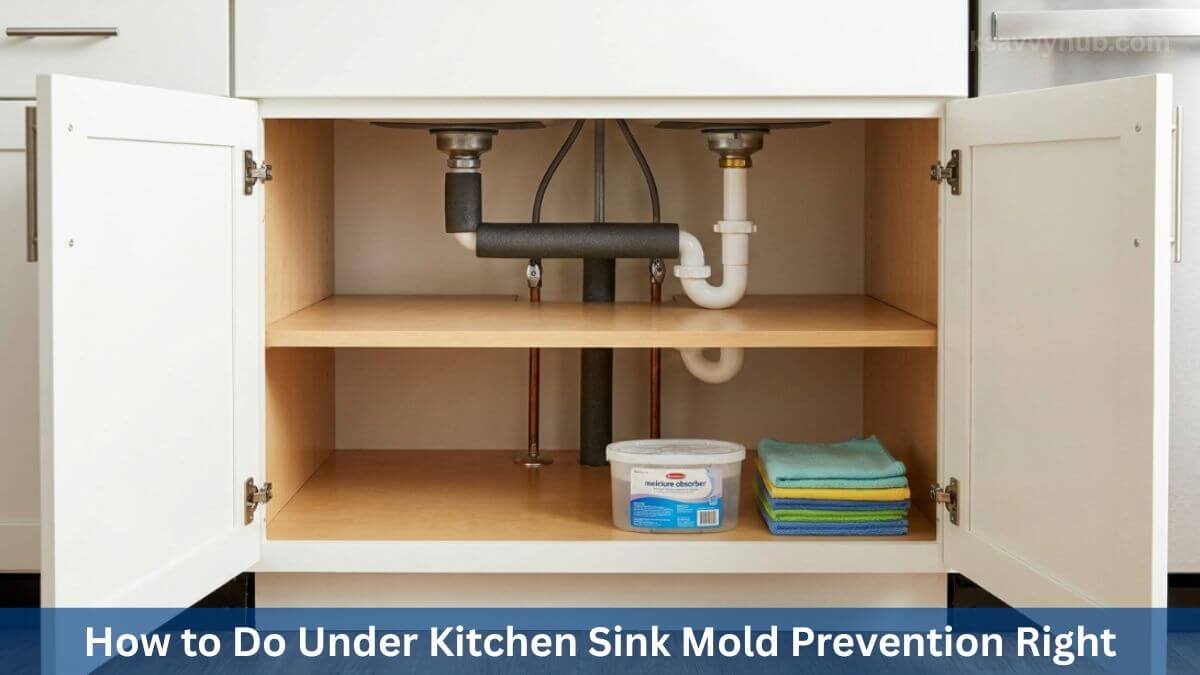

I deal with damp sink cabinets often. A small pipe drip can ruin baseboard wood over time. You open the cabinet door and smell heavy, damp air. In humid homes, warm air can make cold pipes sweat, and changing temperatures stress older fittings. You need a practical plan to keep this space dry.
Good under kitchen sink mold prevention keeps your wood safe. I use a sharp utility knife and a caulk gun to seal open gaps. A basic moisture meter helps find hidden wet spots. Better airflow and tight pipe seals help keep the cabinet fresh. I will show you how to manage this space and keep it clean.
Why Mold Grows Under the Kitchen Sink So Easily
Mold grows here because dark cabinets trap moisture right next to bare wood. We shut the heavy door and rarely check inside, giving dampness quiet time to spread.
Last Tuesday, I pulled an old soap box from the back of my cabinet. The bottom felt damp and smelled like wet dirt. That shows how quickly moisture settles.
The Environment Is Almost Perfect for Mold
Mold needs water, dark shadows, and food to survive. Your sink cabinet gives it all three when leaks happen. Cold metal pipes sweat heavy water drops on warm days, and small drain joints can weep onto the flat base.
Heavy wooden doors trap that damp air inside. Standard pressed wood acts like a dry sponge, absorbing drips and giving mold a place to settle. Stopping this cycle is the main goal of keeping mold out of the sink cabinet.
Signs of Mold Under Kitchen Sink to Catch Early
Catching damp spots early makes cleanup much easier. Look for clear warning signs before the moisture reaches deep into the wood.
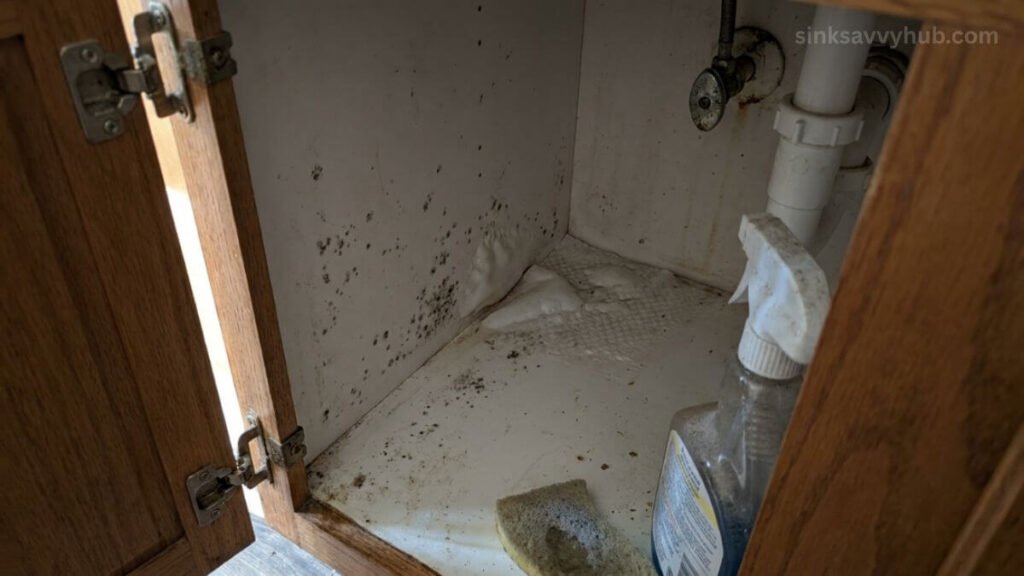
- Musty smells: A heavy, dirt-like odor hits your nose when you open the door.
- Dark spots: Look closely at the deep back corners and around the pipe holes.
- Soft wood: Press the baseboard with your hand. Spongy spots mean water damage.
- Peeling paper: Cheap cabinet liners bubble up when moisture sits underneath.
Finding any of these signs means moisture is present. Cleaning the area quickly helps protect your wood base from further damage.
Finding the Moisture Source Before Doing Anything Else
You must find and stop the water leak before you scrub away any dark spots. Cleaning wet wood does not help much if water keeps dripping on it.
Last month, I spent time cleaning fuzzy spots off a cabinet wall, but I missed a tiny loose pipe fitting. The dampness returned in a few days. Real mold prevention under the sink means cutting off the water source first. Fix the drip, then clean the area.
Common Sources of Under Sink Moisture
Slow pipe leaks and pipe sweat cause most of the dampness inside your cabinet.
- Slow pipe drips: Supply hoses and loose drain nuts weep water slowly in the back corners.
- Cold pipe sweat: Metal cold water lines drip condensation onto the wood base on warm days.
- Sink rim leaks: Old caulk around your sink basin lets counter water run down the inner walls.
- Drain splash: Loose drain pipes let water slip past when you wash dishes.
Knowing exactly where the water comes from makes your repair job much more effective.
How to Check for Active Leaks Before Cleaning
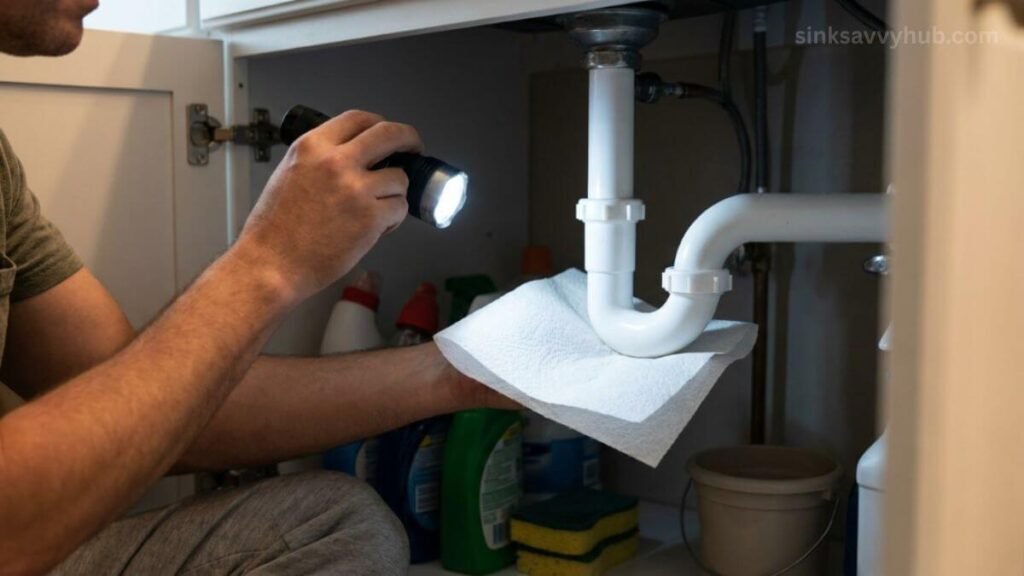
Run your sink tap on high for two minutes and check every joint with a dry paper towel. I crouch down with a bright flashlight and watch the water flow. I gently touch the metal supply lines, the plastic P-trap, and the wall pipe with the paper.
Any wet spot on the paper shows an active drip. Wrap a piece of tape around that wet joint so you remember where it is. Fixing that taped spot first solves your main moisture problem.
Kitchen Sink Cabinet Mold Removal Before Prevention Starts
You should clean away active spots before you set up any new liners. Covering a damp patch with a rubber sheet traps the moisture underneath.
Last weekend, I tried to cover a small musty patch to save time. The smell got worse a few days later. You need to clean the surface to keep the air fresh.
What to Use for Safe Surface Mold Removal
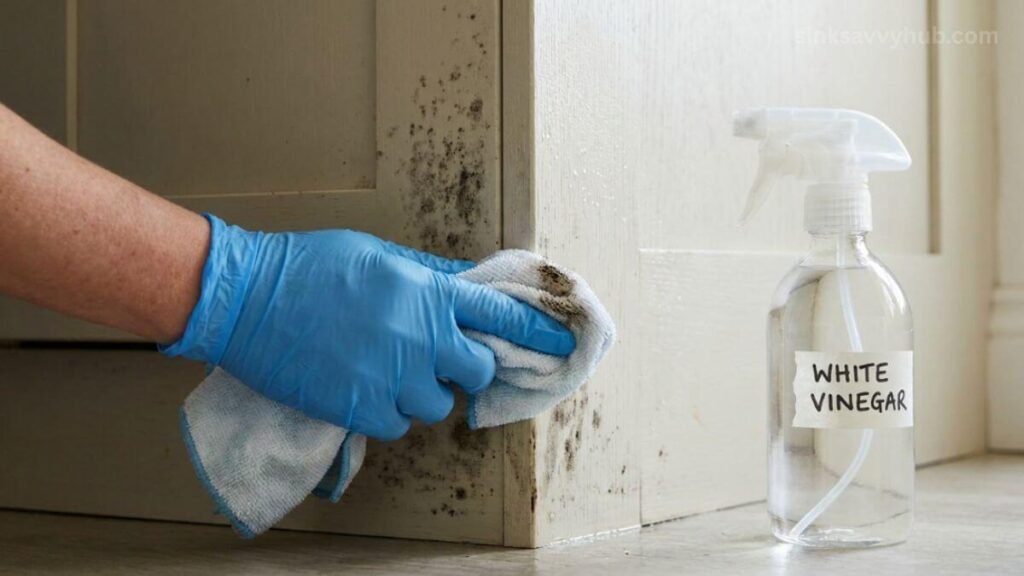
Spray plain white vinegar or diluted hydrogen peroxide to clean light spots on solid cabinet walls. These liquids work well without harsh fumes.
- Use white vinegar on smooth, painted wood surfaces.
- Try a commercial cleaner designed for bare, rough wood floors.
- Skip the heavy bleach when cleaning inside a tight, closed cabinet.
Bleach is not my first choice for tight cabinet spaces, especially on porous wood. It leaves strong fumes and might not solve moisture that has soaked into the material.
When the Damage Is Too Deep to Clean
You might need to remove the wood if it feels spongy or smells bad after a deep scrub. Surface sprays cannot reach moisture buried deep inside wet wood.
If the baseboard bends when you push down on it, remove the damaged material safely. You can replace that bad wood piece with a solid PVC trim board because hard plastic handles moisture much better than wood. Once you place that new board, you have a clean slate to keep the space dry.
Under Sink Moisture Control for Long-Term Prevention
Keeping the space dry and well-ventilated helps stop dampness from returning. Preventing cabinet mold relies on blocking liquid water and moving the trapped air.
I used to wipe up spills and ignore the humid air inside. The dark spots came back. Now, I seal the bare base and improve the climate inside the box.
Waterproofing Under Kitchen Sink Cabinet Walls and Floor
Paint a waterproof primer over the bare wood to block future drips. I use a brush to coat the floor and the bottom edges of the side walls.
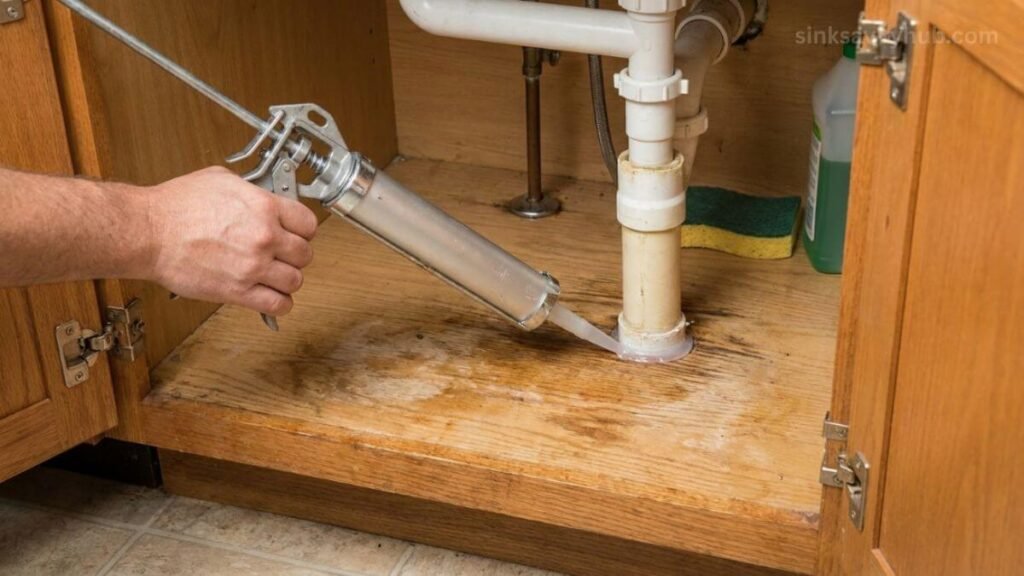
Once that paint dries, lay down a thick tray-style rubber mat. Squeeze clear silicone caulk into the gaps around your drain holes. This seals the base and stops damp air from creeping up through the floorboards.
Preventing Pipe Condensation Under Sink
Wrap your bare metal cold water lines in foam tubes to stop sweating. Cold pipes drip condensation onto the wood on warm days.
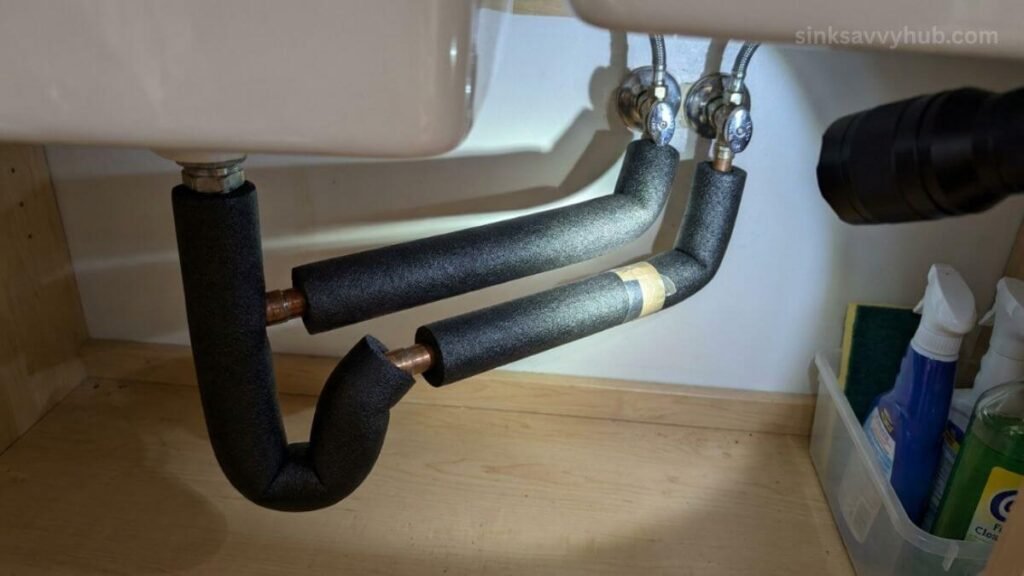
I spent ten minutes snapping foam insulation sleeves over my supply lines last summer. It felt good to touch dry foam instead of cold, wet metal. This small fix removes a common water trap.
Improving Airflow Inside the Cabinet
Leave open space between your soap bottles so fresh air can move around. Better airflow helps the cabinet dry faster, which makes mold less likely to return.
Do not pack your items tight against the back wall. Leave a clear two-inch gap behind your supplies. Drop a small moisture absorber inside the door to catch extra humidity.
I used to keep empty spray bottles down there. Throwing them out let the dark space breathe. A clean, open cabinet smells fresh.
Ongoing Habits That Make Moisture Control Last
Good habits keep the cabinet dry long-term. Maintaining this space takes a few minutes a month and changing what you store inside.
I used to stuff wet sponges in the dark back corner. That mistake led to wood damage over time. Now, I stick to a simple cleaning routine.
A Monthly Check That Takes Two Minutes
Look under your sink once a month to catch tiny drips before they turn into bigger issues. I pick the first Saturday of every month and open the cabinet doors wide. Then I run my hand along the supply lines to feel for cold sweat.
A dry paper towel helps me check the plastic drain joints. If the paper stays dry, the wood is usually safe. If the paper stays dry, the wood stays safe.
This fast routine is the core of real under kitchen sink mold prevention. Catching one loose pipe nut early saves you from a larger repair later.
What to Store Here and What to Move Elsewhere
Store dry goods in solid plastic bins and keep wet items away from this dark box. Cardboard boxes and damp rags hold onto heavy humidity.
I threw away all my soggy scrub brushes and old cardboard soap boxes. Now, I only keep sealed spray bottles down there.
- Keep: Hard plastic bins, sealed cleaners, and dry tools.
- Remove: Wet cloths, sponges, and paper packaging.
Moving your damp rags up to the sink edge keeps the trapped air underneath much drier.
When to Call a Professional Instead of Handling It Yourself
Call a professional when dark spots cover a large space or a bad smell never leaves. Basic cleaning handles small areas, but larger moisture problems may need expert help.
I once tried to clean a large musty patch inside an old cabinet. The smell felt too strong for me to keep working safely, so I stopped and called for help. You should step back when things look too deep to handle alone.
- The spots cover more than ten square feet of your space.
- The marks grow on the deep drywall, not the wood base.
- A heavy, dirty smell stays in the air even after you clean the area.
- Water keeps pooling on the floor, and you cannot find a leaky pipe.
Bringing in a pro helps keep your home safe. They can remove damaged material and check hidden areas more thoroughly.
Frequently Asked Questions
Is mold under the kitchen sink dangerous?
It can be a concern, especially if the area stays damp or the mold spreads. I clean small spots quickly and avoid breathing in dust or strong odors.
Can I clean mold under the sink myself?
You can clean small surface spots with white vinegar. Wear a mask and wipe the bare wood clean. Call a pro if the dark patch is very big.
What is the best way to stop mold from coming back?
You must fix the wet pipe leak first. Then dry the bare wood and let fresh air inside. A dry cabinet stops the dark spots from growing.
Should I use bleach under a sink cabinet?
No, heavy bleach fumes get trapped in the tight box. Bleach does not clean deep wood roots well. White vinegar works much better for soft wood floors.
How often should I check under the sink?
You should look inside the dark box once a month. I touch the metal pipes to feel for wet sweat. A quick check catches small drips very early.
Small Habits Keep the Sink Cabinet Clean
Small problems are often manageable when you catch them early. Keeping the space dry requires fixing drips fast, sealing the wood, and peeking inside once a month.
I keep my supplies tidy and check the pipe joints every few weeks. I open the cabinet door sometimes to let the air move. It is a simple habit that keeps my wood dry and fresh.
But if damp spots keep coming back or the cabinet feels soft, I do not ignore it. That usually means moisture is still hiding somewhere. Keep the area clean and keep watching.