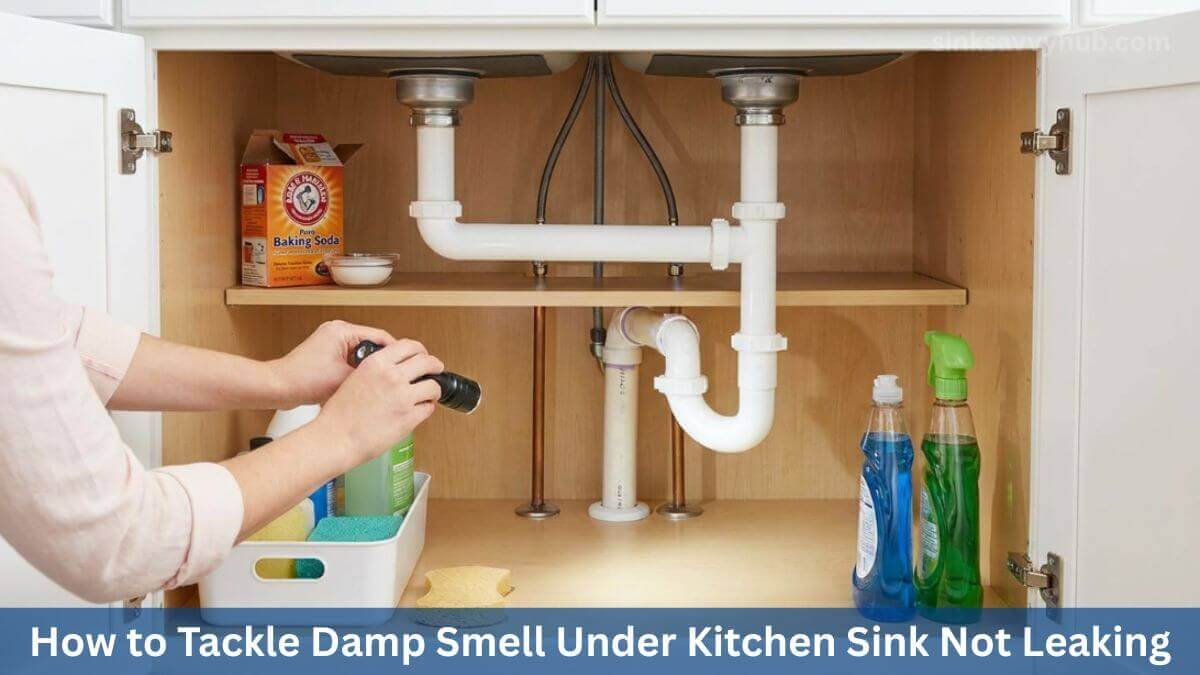

I deal with damp sink cabinets often. You might notice a damp smell under the kitchen sink with no visible leak. Warm, humid air can make cold pipes sweat. In colder months, changing temperatures can also stress older fittings and create hidden moisture.
I will show you how to find the root of the dampness. You do not need heavy plumbing tools for this. We can track down the real issue and freshen up your cabinet base with a flashlight, dry paper, and a little patience.
Why There Can Be a Damp Smell Under Kitchen Sink With No Visible Leak
A damp smell under the kitchen sink with no visible leak happens when hidden moisture builds up over time. Finding where this secret water comes from is the first step to a fresh cabinet.
Last Tuesday, I checked a smelly sink in an older house. The base looked totally dry, but the air smelled like wet dirt. I had to look past the obvious pipes to find the trapped dampness.
Condensation Smell Under Kitchen Sink
Cold water lines sweat in warm weather. Moisture forms on the outside of the pipe and drips slowly onto the floor. This quiet dripping can last for weeks before you notice a condensation smell under the kitchen sink.
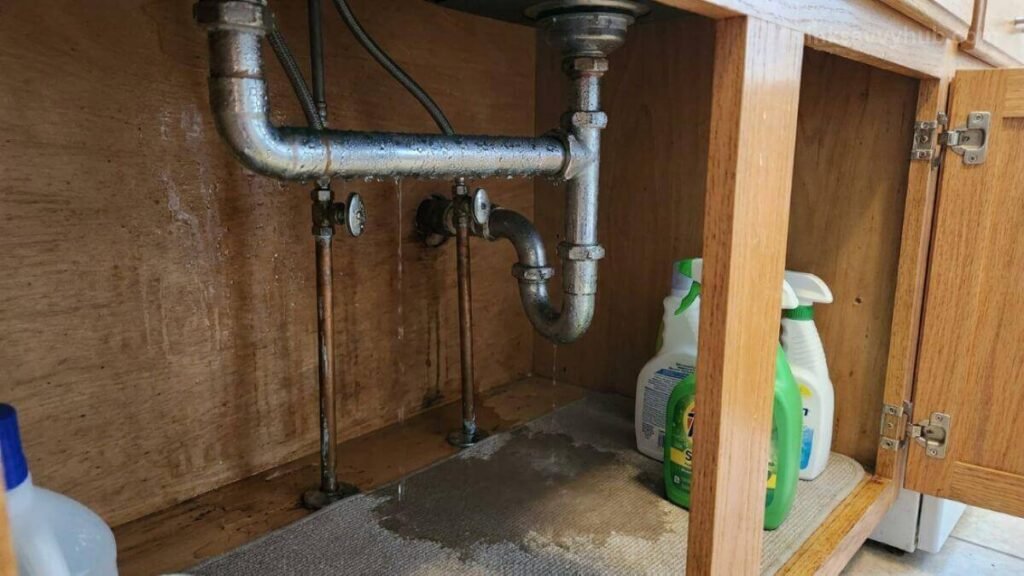
The soft wood soaks up this low-level wetness. It creates a stale odor that has no clear source. There is no broken pipe to fix, a cold metal line sweating in the warm air.
Residual Moisture in the Cabinet Material Itself
Most under-sink floors use pressed wood that drinks up water like a sponge. Even after you fix an old leak, the trapped moisture stays deep inside the wood.
This leftover water struggles to dry in a closed, dark space. The damp smell comes from what the cabinet absorbed months ago, long after the actual drip stopped.
Musty Smell Under Sink Without Visible Water – When Mold Is the Source
Mold does not need a large puddle to grow. It thrives on a damp surface, dark corners, and still air. Your sink cabinet provides all three conditions easily.
Hidden spots can grow deep inside the back corners or right under a plastic liner. You cannot see it from a quick surface check. A musty smell under the sink usually means there’s hidden moisture.
Old Food Debris and Buildup Can Also Cause the Smell
Old food bits and dirty sponges can also cause a damp smell under the kitchen sink. You usually need a deep clean to clear the air.
Last Friday, I felt confused by a stale odor in my cabinet. The pipes were completely dry. Then, I pulled out a wet sponge hiding in the back corner. It smelled like old, wet dirt.
Grease and dirty water run down the outside of your main drain pipe. Food crumbs wash into the top cabinet gap and sit there. Empty the box, wipe the ceiling pipe hole, and scrub the dark corners to stop this odor.
How to Find the Actual Source of the Smell Before Treating It
You find the real source of the smell by testing for slow drips and checking deep corners. Masking the bad odor hides the actual issue.
Last Sunday, I felt frustrated sniffing a clean-looking cabinet. I grabbed some dry paper towels and a bright flashlight to track down the hidden wet spots.
The Dry Paper Towel Check for Hidden Moisture
To find hidden moisture, first wipe everything dry. Then, check again after twelve hours using fresh paper towels.
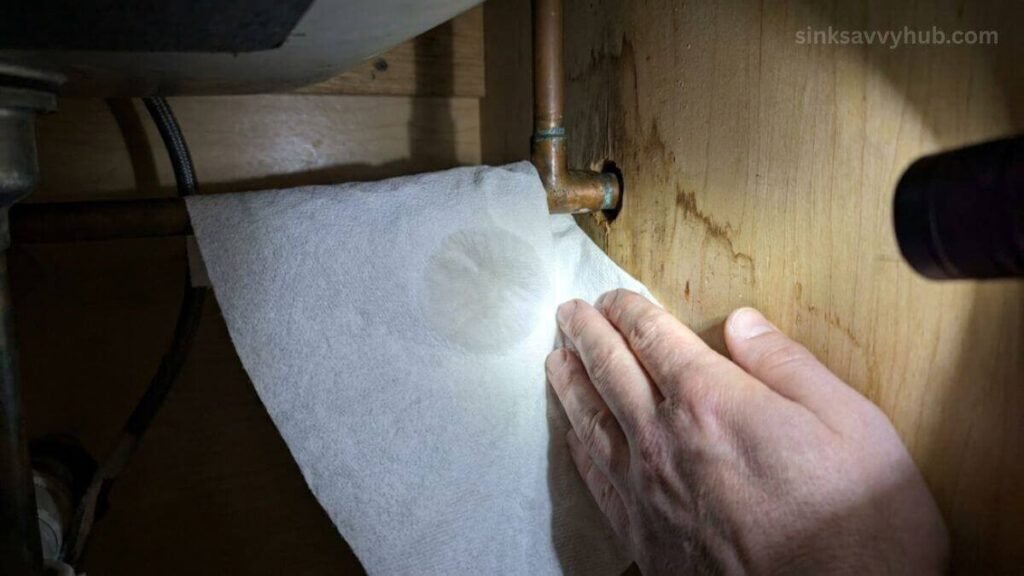
Even a tiny drip leaves small wet marks. Dry the cabinet floor and all metal pipes completely. Come back twelve hours later. Press fresh dry towels against the pipe joints and the bare wood base. Any wet spot on the crisp white paper points right to pipe sweat or a quiet hidden leak.
Checking for Mold in the Places Inspections Usually Miss
You find hidden spots by pulling up old plastic liners and shining a bright light into the deepest corners. Dampness hides where water sits in completely still air.
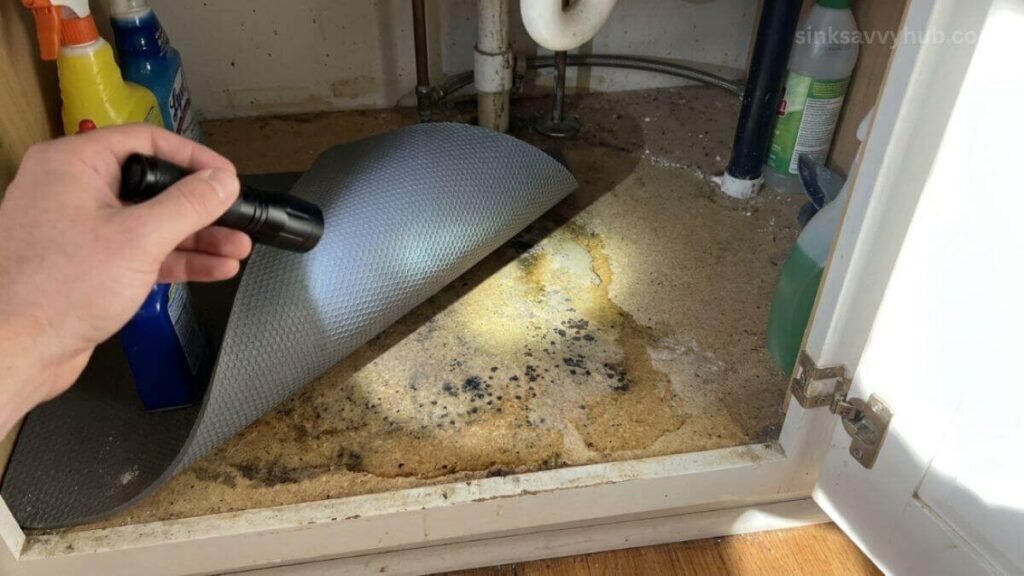
- Under the mat: Lift the rubber liner. Trapped water breeds dark spots right on the floor.
- The top panel: Run your bare finger under the cabinet ceiling. Hidden grease often sticks here.
- The fan test: Point a small desk fan inside. If a heavy earthy smell blows out, hidden dampness may still be inside the cabinet material.
Finding these hidden spots early helps you fix the root cause so the stale smell stays away.
Under Sink Cabinet Odor Removal – Cleaning and Treating the Source
You remove cabinet odors by matching your cleaning method to the exact cause, like damp wood or dirty drains. One basic spray will not fix every type of smell.
Last month, I scrubbed a musty kitchen sink base with dish soap. The wet dirt smell stayed because I used the wrong fix. You have to treat the real problem to get fresh air.
For Mold and Mildew Smells
Wipe hard plastic or painted walls with plain white vinegar to clear light spots safely. For bare or damaged pressed wood, surface cleaning may not be enough.
I always leave the cabinet doors wide open for two days to dry. If the smell stays or the material feels soft, repair or replacement may be safer than more cleaning.
For Condensation and Moisture Odors in the Cabinet Wood
Once the wood is fully dry, a clear waterproof sealant can help block old stains and reduce lingering odor from the cabinet base. Lightly sand the dark water spots first.
I painted my own sink base last summer to trap a stale smell. The thick primer stops the old wood from breathing that damp odor back into your clean kitchen air.
For Organic Debris and Drain-Related Smells
Scrub the sticky grease off the outside of your drain pipe to remove trapped food smells. Warm soapy water and a brush work perfectly for this job.
- Wipe the ceiling: Clean the wood right under the sink bowl where invisible grease drips.
- Flush the drain: Pour hot water and vinegar down the sink to clear the sludge hiding inside the pipe.
- Toss damp stuff: Throw away old, wet cloths and sponges that trap bad air.
Clearing out these sticky messes removes the organic smells that a quick daily wipe-down always misses.
How to Deodorize Under Kitchen Sink Cabinet After Cleaning
You clear out bad odors by trapping them with baking soda or charcoal. Do not try to hide them with heavy air freshener sprays.
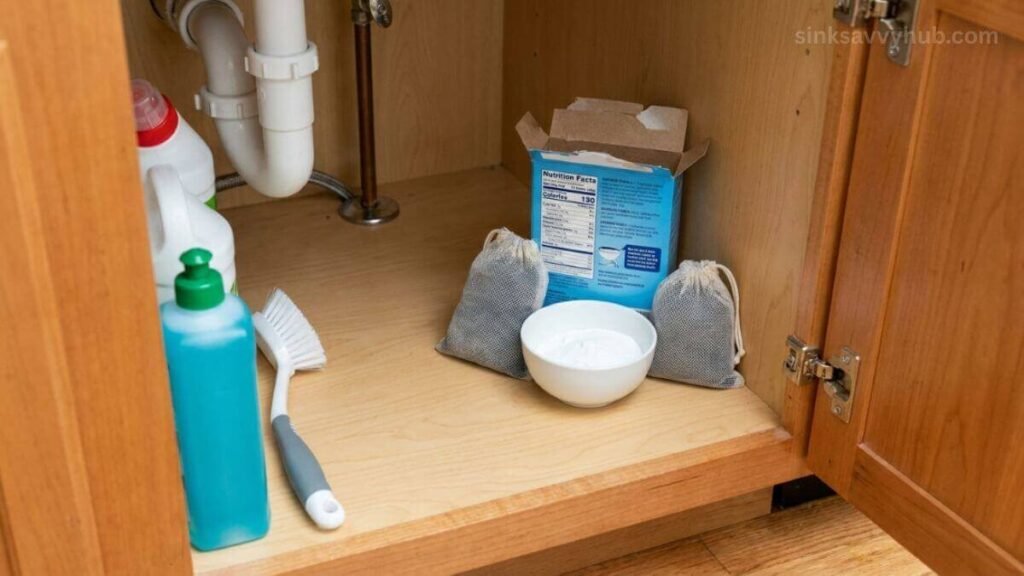
Last Monday, I sprayed a pine scent inside my sink base. It mixed with the stale wood odor and made the smell heavier. Hiding odors never really works.
Now, I leave the cabinet doors wide open for a full day. Fresh air helps dry the tight space. Then, I push an open box of baking soda against the deep back wall. If a stale smell still stays, I drop in two small charcoal bags to safely absorb the damp air.
Stopping the Smell From Coming Back
You stop the damp smell from coming back by reducing pipe sweat and letting fresh air flow through the cabinet. Keeping the air dry helps the stale odor stay gone.
Last fall, I felt so relieved when my kitchen finally smelled like fresh coffee instead of wet dirt. I spent fifteen minutes changing how I store my cleaning gear, and it helped the dark space breathe.
Insulate the Supply Lines to Stop Condensation
Cold water lines sweat heavy drops when warm room air hits them. Snap cheap foam pipe insulation sleeves right over the bare metal tubes to reduce this temperature drop.
I wrapped my cold water lines last July. The thick foam stops the freezing metal from chilling the humid air around it. This simple fix helps reduce pipe sweat and keeps the cabinet drier.
Improve Ventilation and Reduce What’s Stored There
A packed cabinet with zero airflow traps damp odors fast. You must leave empty breathing room between your plastic bins and the deep back wall.
- Throw out junk: Remove soft cardboard boxes that drink up heavy humidity.
- Add empty space: Keep a clear two-inch gap around all the plumbing pipes.
- Catch rogue moisture: Drop a small plastic humidity absorber near the back corner.
Checking the dark box on the first Sunday of every month keeps your mind at ease. You open the wooden doors, touch the dry metal pipes, and make sure the air stays fresh.
Frequently Asked Questions
Why is there a damp smell under kitchen sink not leaking?
A damp smell can come from trapped humidity, pipe condensation, old liners, or damp cabinet wood. Check the back corners and pipe joints first to find the hidden moisture.
How do I fix a condensation smell under kitchen sink?
A condensation smell often comes from cold pipe sweat. Wrap foam sleeves around bare metal lines to help keep the cabinet base drier.
What causes a musty smell under sink without visible water?
A musty smell under the sink without visible water often points to hidden dampness. Dark spots may be hiding on damp wood or under an old liner. Lift the floor mat to catch any bad spots early.
Can an old food debris smell under kitchen sink hide there?
Yes, an old food smell can build up under the kitchen sink. This happens when grease and dirty water go down the main drain pipe. Wipe the top cabinet panel around the pipe hole to stop the stale odor.
What is the best under sink cabinet odor removal trick?
Good under sink cabinet odor removal starts with a deep clean. Set an open box of baking soda right near the back wall. This pulls stale odors out of the space safely.
The Smell Usually Has a Source You Can Track
A damp smell under the kitchen sink usually has a source, even when you do not see water. It may be pipe sweat, trapped moisture, old liner odor, or food residue near the drain.
Once I find the source, I clean the area, dry the cabinet fully, and keep air moving. If the smell returns, I check again instead of covering it with spray. Finding the true hidden wet spot helps you keep your kitchen smelling fresh.