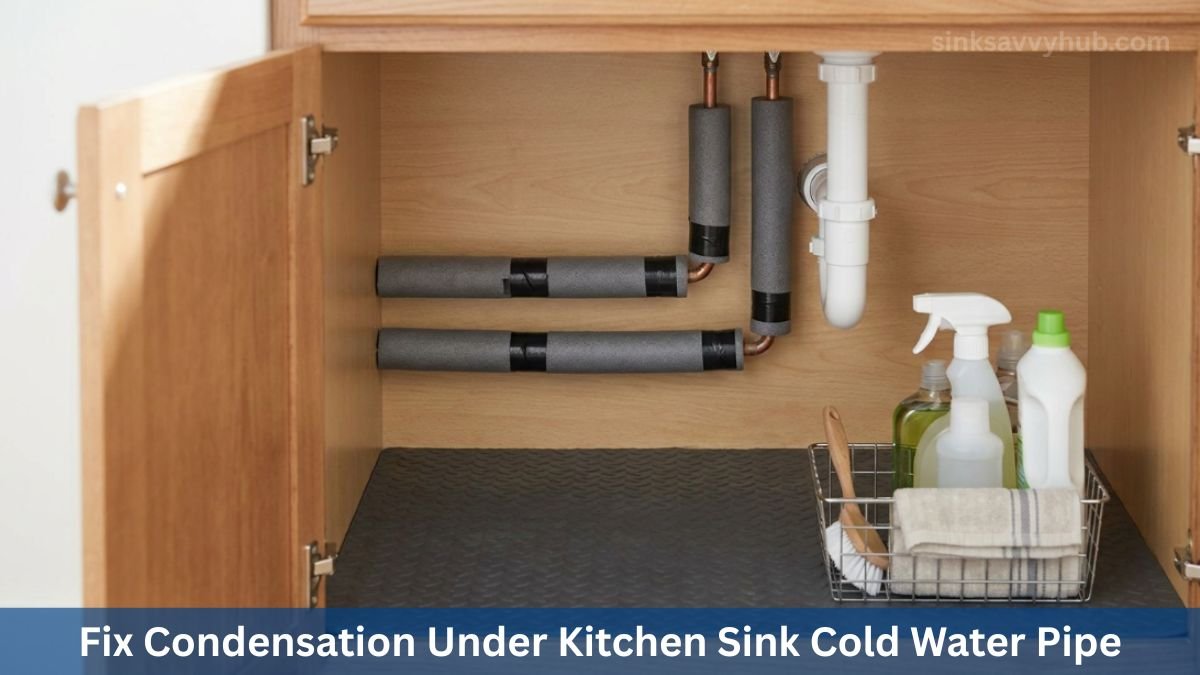

Sometimes the cabinet floor feels damp even though there is no visible leak. Often, the real cause is condensation forming on the cold water pipes under the sink. You might spend a whole weekend checking every plumbing joint, only to find that everything is perfectly tight.
Warm air in a humid home simply makes cold plumbing sweat fast. I deal with these damp sink cabinets quite often. I will show you how to find the root cause, wrap the pipes properly, and dry out your dark cabinet space today. You do not need expensive tools to fix this annoying moisture problem.
Why Cold Water Pipes Sweat Inside the Kitchen Cabinet
Cold water pipes sweat inside the kitchen cabinet because warm, humid air hits the cold metal surface and turns into liquid water. It acts exactly like a cold glass of water sweating on a hot afternoon table.
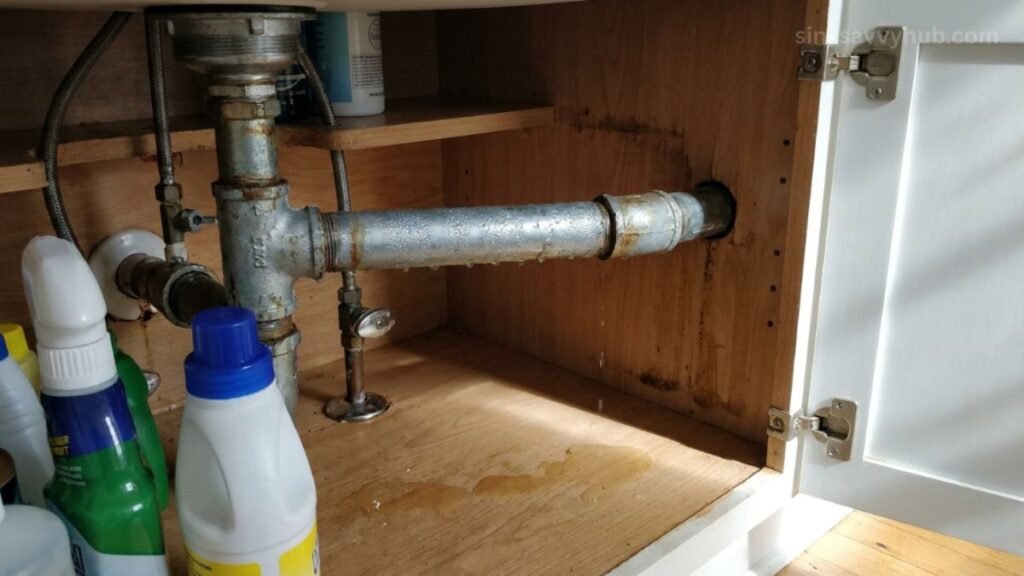
You might spend time wiping perfectly good pipes only to see them get wet again. The metal feels ice cold and slick, even when no one breaks a joint.
The Science Behind Pipe Sweating Causes in Kitchen Cabinet
Pipe sweating happens simply because the water flowing inside the line is much colder than the enclosed air around it.
When you turn on your cold tap, the metal surface chills fast. The warm air touches the cold metal surface, and moisture in the air condenses into water droplets. Since there is no breeze inside the box, this quiet dripping runs continuously every time you wash dishes.
Why It Gets Worse in Summer and in Humid Climates
During warm months, indoor air holds more moisture. When that humid air reaches the cold pipe surface, condensation forms quickly.
That is why the problem becomes much more noticeable during the summer. Your plumbing has not changed at all, but the sticky room air makes the moisture issue much worse than in dry winter months.
Cabinet Design Makes It Worse
A tightly closed sink cabinet traps damp air inside and stops fresh breezes from drying the wet metal. Most of us pack the space full of heavy plastic bins and tall soap bottles.
This clutter blocks the air completely. The wet air sits trapped against the bare metal for hours. As a result, pipe condensation simply builds up into a stale puddle instead of drying out.
Condensation vs Leak Under Kitchen Sink – How to Tell the Difference
You tell a sweat problem from a real leak by watching exactly where the water sits. A leak drips from one broken joint, while sweat covers the entire cold metal line.
I once nearly took apart a perfectly good shutoff valve because I thought the nut was bad. Misjudging the water source wastes your time.
What Condensation Looks Like
Pipe sweat leaves a thin, wet coat over the whole metal line. The metal feels slick even when nobody has run the tap recently.
- Even spread: Water coats the bare pipe up and down, not at one single nut.
- Long floor marks: The floor shows a long damp line right under the pipe path.
- Weather linked: The wetness gets much heavier on sticky, hot days and dries up in the winter.
What an Actual Leak Looks Like
A true plumbing leak creates a focused, steady drip right at a specific connection. The water comes from a physical gap in the plumbing.
- Targeted drips: Water pools directly under a shutoff valve or a plastic P-trap joint.
- Instant wetness: A dry paper towel gets soaked instantly when you press it against the bad nut.
- Crusty joints: White chalky mineral crust forms around the broken seal after dripping for weeks.
The Quick Test That Confirms Condensation
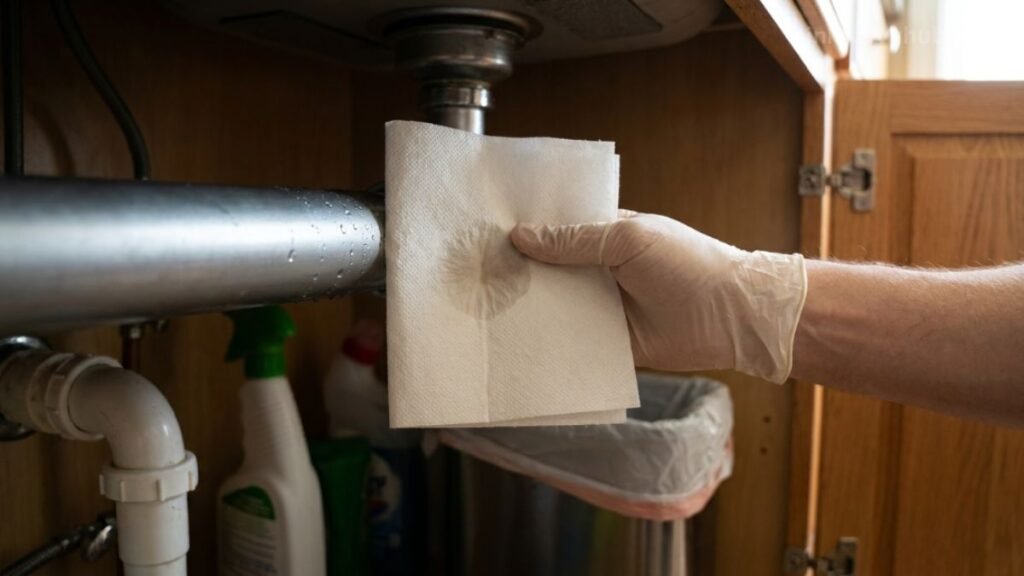
You test this by drying the metal completely and checking it hours later with dry paper. Wipe the floor and the metal pipes completely dry with a towel. Close the door and do not run the tap at all.
Open it four hours later. Press a fresh paper towel along the metal tube. If the paper is wet all along the line, you probably have moisture on cold water lines. If only one nut is wet, you have a real leak.
Humidity Buildup Around Cold Water Pipes – Why Some Homes Are More Affected
High indoor wetness and open floor gaps make pipe sweat much worse in some homes. If your house traps damp air, your pipes will drip a lot. A closed box can easily act like a damp air vent if there are gaps below.
Two main things trap this wetness:
- Poor airflow: Kitchens without good stove vents trap sticky air from boiling pots.
- Floor gaps: Large holes around the drain pipes let wet air rise straight up from the damp dirt below.
Sealing unnecessary floor holes takes ten minutes with basic caulk. It stops the steady flow of wet air that makes your bare metal pipes sweat all day.
How to Insulate Cold Water Pipes Under Sink – The Most Effective Fix
You insulate cold water pipes by wrapping them in closed-cell foam sleeves to block warm air from touching the freezing metal. This stops cabinet sweat fast.
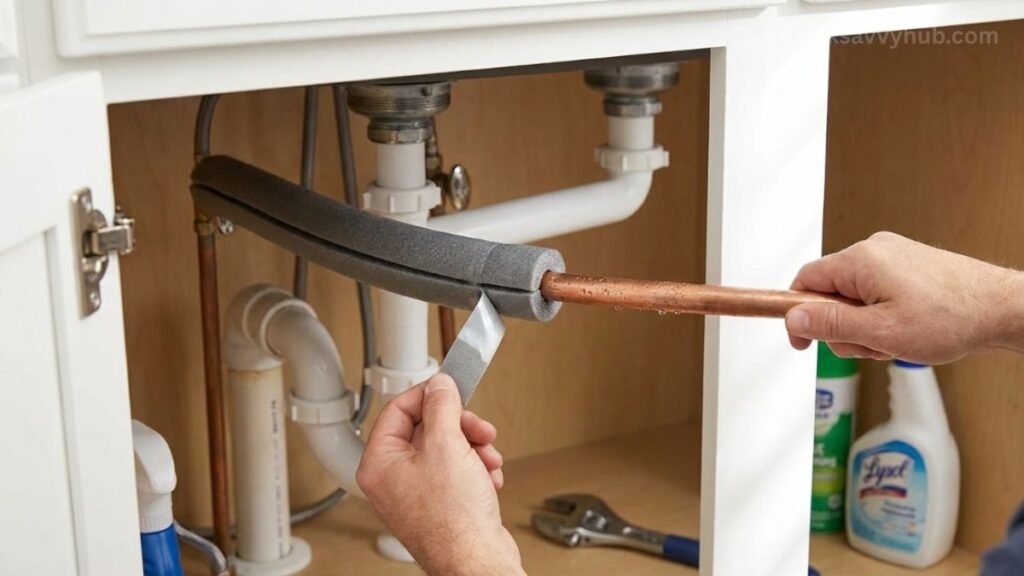
My hands often got covered in icy moisture while organizing the cabinet, but snapping a foam cover on changes that wet steel to dry foam.
Foam Pipe Insulation for Kitchen Plumbing – What to Buy
Buy pre-split, closed-cell foam sleeves that perfectly match your water lines. Most home pipes need half-inch sleeves. Avoid open-cell foam because it drinks water like a cheap sponge. Grab foam tape to seal the seams tight.
Step-by-Step Installation
You do not need to turn off your main water for this simple job.
- Dry the metal: Wipe the cold tube completely dry with a clean cloth.
- Snap it on: Open the side slit and push the foam directly over the pipe.
- Tape the seam: Press sticky foam tape over the split so warm air never sneaks inside.
What to Do at Fittings and Tight Spots
Cut the foam tube where the metal meets a shutoff valve. Do not force straight foam over bulky, curved nuts. Wrap sticky foam tape tightly around those awkward bent spots. Covering most of the bare metal drops the total sweat drastically.
Addressing Humidity Buildup Around Cold Water Pipes Beyond Insulation
You stop humidity buildup by sealing floor holes and letting fresh air move around your pipes. Foam wraps help, but trapped air still causes problems. A tightly packed cabinet with soap boxes blocks all the clean air and creates a stale, damp odor.
Sealing Gaps Around Pipe Penetrations
Seal any gaps around pipe penetrations with a suitable sealant. This stops humid air from entering the cabinet. Large holes let sticky, wet air rise straight up from the floor space below. Filling those wide floor gaps in ten minutes stops the heavy condensation under the sink.
Improving Airflow in the Cabinet
Leave space around your plastic bins so fresh breezes can dry the wet metal. A jammed cabinet traps foul, damp air fast.
I threw out my soggy cardboard boxes and left a clear two-inch gap around my drain lines. Then, I dropped a small moisture absorber in the deep back corner. Now, I open the door and feel cool, dry air instead of sticky humidity.
Protecting the Cabinet Floor From Condensation Damage That Has Already Occurred
You protect a damaged cabinet floor by sealing the dried wood or replacing soft boards with hard plastic. A thick rubber mat adds the final shield against new pipe sweat.
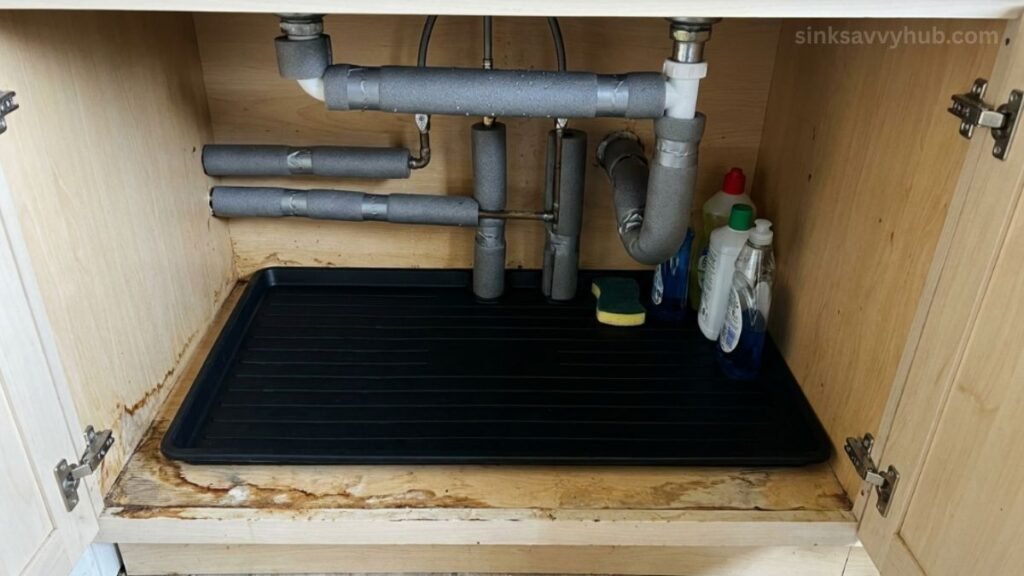
If you press on the sink base and the wood feels soft or spongy, hidden water damage may already be present. You must stop this decay before it spreads.
- Test the wood: Press the floor hard. Soft, spongy spots mean the cheap pressed wood is already ruined.
- Seal light damage: Paint a clear, waterproof sealer right over dry, dark water stains to lock out new moisture.
- Fix heavy rot: Cut out the soft, spongy wood. Drop a solid PVC board in its place. Hard plastic never rots.
- Add a mat: Slide a thick waterproof tray liner over the clean base.
This simple tray catches any stray water drops while your main plumbing fixes take full effect.
Frequently Asked Questions
Why is there condensation under kitchen sink cold water pipe?
Warm wet air hits the cold metal tubes. It makes the room air drop heavy water on the floor. You can stop this wet mess fast if you wrap your cold lines today.
How do you stop cold water pipes from sweating?
You must block the warm room air from hitting the bare metal. Wrap a closed cell foam tube around the cold lines. It is a very fast fix that saves your wood base.
How do you tell a leak vs condensation under kitchen sink apart?
A real leak drops water from one bad nut. Pipe sweat coats the whole metal line in a thin wet film. Dry the pipes first to see exactly where the water forms.
What is the best foam pipe insulation for kitchen plumbing?
You should buy closed cell foam sleeves for your home sink. They block wet air and do not drink up water. Snap them on and tape the seam tight for a dry space.
How do you fix humidity buildup around cold water pipes?
Fill all deep open floor gaps near the drains with basic caulk. Leave open space around your soap bins. Fresh air helps dry the dark box so the wetness stays gone.
One Small Fix Can Keep the Cabinet Dry
In most cases, the problem is not a leaking pipe at all. It is simply warm, humid air meeting a cold water line. Once you insulate the pipe and improve airflow inside the cabinet, the moisture usually becomes much easier to control.
You need to seal the unnecessary floor gaps and give your storage bins some breathing room. A quick monthly check helps catch any leftover moisture early before it stains the bare wood or creates stale odors. You can enjoy a clean, dry kitchen cabinet without calling a costly plumber.